Event 1
Spencer Hill's suicide
[Spencer Hill's suicide](entity:event-recall-event-9a086b0927b2) is the loss that fractures [Betsy Hill](entity:character-recall-character-betsy-hill-5ba525cdb1fc) and [Ron Hill](entity:character-recall-character-ron-hill-b22d4727ae7f)'s family and continues to shape how the adults around [Adam Baye](entity:character-recall-character-adam-baye-7f22fa60bcd3) understand his withdrawal. Spencer sent a goodbye text, left home with stolen pills, and died alone on his high school roof. The circumstances became more than a private tragedy: they resurfaced in a memorial page, in Betsy's memories of her son, and in her insistence that the unanswered questions about his final night still mattered.
## Circumstances and Discovery
Four months before [Mike Baye](entity:character-recall-character-mike-baye-1470215d703d) and [Tia Baye](entity:character-recall-character-tia-baye-5661a1b93f78) discuss [Adam](entity:character-recall-character-adam-7e6d3c5ddcc8)'s behavior, Spencer, one of Adam's classmates, died by suicide. The loss devastated his parents and affected Adam and the other students. [Mike](entity:character-recall-character-mike-cb6fa8ab1468) invokes Spencer's death while questioning whether it might help explain Adam's recent behavior. [Tia](entity:character-recall-character-tia-31eb59c37882)'s response turns the tragedy into a painful parental question: if Spencer were still alive, she suggests, his parents might wish they had watched him more closely. The exchange does not establish that closer supervision would have changed what happened; it shows how the death unsettles the choices Spencer's classmates' parents now face.
Spencer's final message reached his parents separately. Ron was in Philadelphia on a sales call when he received the first text. Betsy received the second while at Chuck E. Cheese's, but did not hear it arrive. About an hour passed before she found it on her phone; by then, Ron had left six increasingly frantic messages. Spencer had written: “I’m sorry, I love you all, but this is too hard. Good-bye.” The message gave his parents a last expression of love, but its explanation of what was unbearable offered no answer they could use to understand his decision.
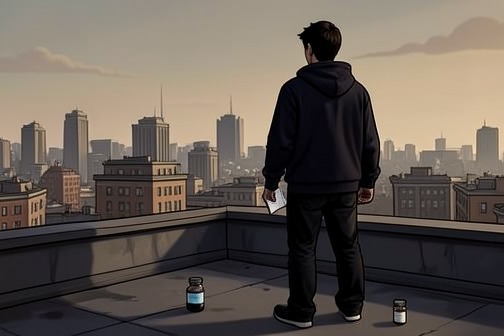
Spencer had also sent the message to a few close friends. He had told Betsy he was going to spend time with Clark, Adam, and Olivia, but none of them saw him; he never showed up. Instead, he went out alone with pills stolen from home and took too many, intending to end his life. A local policeman found his body on the high school roof. It took police two days to find him. The gap between the farewell text and the discovery left the final words in his parents' possession while Spencer's whereabouts—and the reason he had left—remained unknown.
## The Memorial and the Life Remembered
A few days after Spencer's death, his classmates created a MySpace memorial page. Its default-image space held a graphic of a flickering candle, and the page played “[Broken Radio](entity:expression-recall-expression-broken-radio-5667c42e45b2),” one of Spencer's favorite songs, by Jesse Malin with help from Bruce Springsteen. Beside the candle was the lyric “The angels love you more than you know.” Betsy listened for a while. The page gave classmates a public place to remember Spencer, but the form of that remembrance also sharpened her awareness of who was and was not visibly mourning.
When she revisited the page, Betsy saw little recent activity and few entries from Spencer's close friends, including Clark and Adam. She wondered whether the public displays of grief by other students reflected deep mourning or had already become part of the routine of school life. She also recognized that those who were hurting most might keep their grief private. The memorial therefore offered no simple measure of who had loved Spencer or how much: its visible comments and images could not settle what his friends felt.
The slideshow brought back a life more specific than the memorial's general expressions of loss. It included photographs from Hillside Elementary School: Mrs. Roberts's first-grade class, Mrs. Rohrback's third-grade class, and Mr. Hunt's fourth-grade class. One image showed Spencer's intramural basketball team. He had sprained his wrist in the previous game, and Betsy remembered wrapping it with an ACE bandage she had bought for him. In the photograph he held that hand up in victory. Though not much of an athlete, Spencer had scored the winning basket with six seconds left. The remembered gesture and the exact, ordinary details of his childhood stand against the death on the school roof; the pictures make the son Betsy knew present again without making his final act comprehensible.
## Grief and the Unanswered Night
The photographs also return Betsy to the discovery of what happened. Spencer's goodbye text had reached her while she was at the arcade-pizzeria, and she did not hear it arrive. He died alone on the roof. [Daniel Huff](entity:character-recall-character-daniel-huff-6393a3de812f), a local policeman whose son [DJ Huff](entity:character-recall-character-dj-huff-387c2d8e173f) was Spencer's age and spent some time with him, came to the door with the news. Betsy remembered opening it, seeing his face, and collapsing. On the memorial page, the slideshow's images of Spencer alive turn into a route back to that moment and to the question his message left behind: what had been too hard? Betsy knows she will never know the answer from Spencer.
The loss remains physically present for her. The day after Spencer was found, Ron began packing away his room, as he had already packed away Spencer's kitchen chair. Betsy stopped him: she could bend under the grief, but she could not accept erasing the room. For days she had lain on the floor in a fetal position and sobbed, with such pain in her stomach that she wanted to die. Later she held Spencer's old cell phone, its battery long dead, and smoothed the sheets on his bed. She pressed her face into his pillow, but his scent was gone. The phone, bed, and room preserve the connection while also registering what cannot be restored.
Betsy eventually tells Ron she needs to find out what really happened that night. She accepts that the truth will not bring Spencer back or necessarily make them feel better, but says they need to pursue it anyway. Her resolve gives the death a continuing consequence: grief does not close when the funeral or memorial ends, and the family does not treat the absence of an answer as a reason to stop asking. In a later conversation, Adam tells her, “I saw you and my mom on the roof,” then apologizes. The disclosure does not, by itself, explain Spencer's death, but it makes the circumstances of that night newly immediate and reinforces Betsy's determination to understand what happened.
Event 2
The Bayes begin monitoring Adam's computer
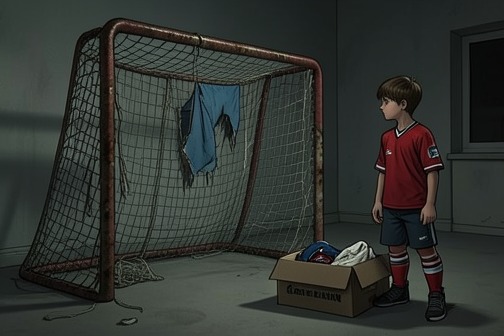
[The Bayes begin monitoring Adam's computer](entity:event-recall-event-0d4735833aee) at a moment when concern for their son has become inseparable from an invasion of his privacy. [Mike Baye](entity:character-recall-character-mike-baye-1470215d703d) and [Tia Baye](entity:character-recall-character-tia-baye-5661a1b93f78) authorize software that records [Adam](entity:character-recall-character-adam-7e6d3c5ddcc8)'s activity, after weeks of estrangement and a difficult choice between trusting him and trying to protect him. What begins as a family measure becomes part of a wider pattern in the novel: digital records and location tools offer clues, but access to information also creates new uncertainties about who can see it and what it can prove.
## The decision after Adam withdraws
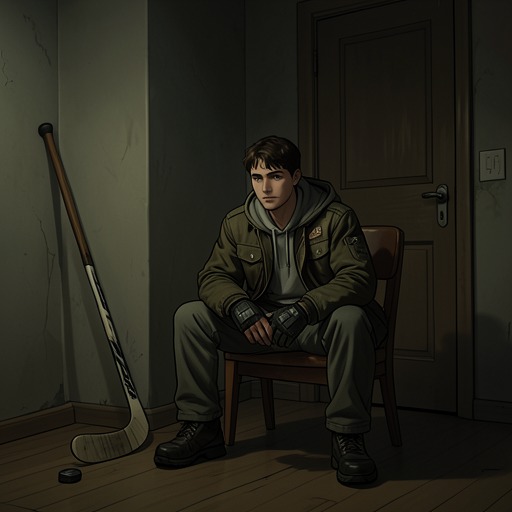
The immediate background is a pronounced change in [Adam Baye](entity:character-recall-character-adam-baye-7f22fa60bcd3)'s behavior. He had once been a promising young hockey player, a goalie whose interest in the sport [Mike](entity:character-recall-character-mike-cb6fa8ab1468) had shared and encouraged. Then, about six months before the monitoring decision, Adam abruptly gave up hockey. The rusted goalpost remained outside the house, its net damaged by the weather, while his stick, pads, and mask were put aside. The abandoned equipment makes the change visible, but it does not explain it.
Over the following month, Mike tried to draw Adam back into family life. He invited him to the mall, an arcade, and concerts; Adam refused. He stayed out late, disregarded curfews, stopped coming down for dinner, and his grades fell. A therapist raised the possibility of depression and wanted another appointment before considering medication, but Adam refused to return. When his parents insisted, he disappeared for two days without answering his phone. He was eventually found safe at a friend's house, but the episode left Mike and [Tia](entity:character-recall-character-tia-31eb59c37882) frightened by how little they knew about their son's whereabouts or state of mind.
That accumulation of changes frames the surveillance decision as a response to fear rather than a detached interest in technology. Mike initially resisted. Tia's position was that Adam's safety outweighed his claim to privacy. Their disagreement was not resolved by a sudden discovery of what Adam was doing; it was a contest between two duties that both parents recognized as real.
## What the software can see
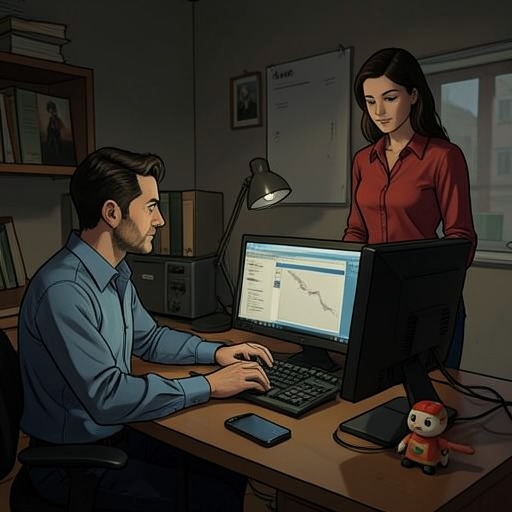
Brett explained that the program would record every keystroke Adam made and send the parents a report at the end of each day. The report could show websites visited, emails sent and received, instant messages, and documents created in PowerPoint or Word. The software also offered a live-view option: a small icon marked LIVE SPY! opened the possibility of watching Adam's activity as it happened. Tia nodded as Mike shook his head, a compact expression of their different reactions to the same explanation.
The breadth of the system matters. It was not limited to checking a particular warning sign or confirming where Adam had gone; it promised a record of ordinary online activity as well. A conversation, a search, and a school document all became potentially visible to his parents. The interface presented this reach as a practical service, but its comprehensiveness made the underlying family question unavoidable: protection could now mean watching even when Adam did not know he was being watched.
Mike's attention briefly returned to the hockey trophies in the room. He had played at [Dartmouth College](entity:location-recall-location-dartmouth-college-f039ac4d2295), been drafted by the New York Rangers, and passed his enthusiasm for the game to Adam, who began skating at three. That history sharpened the contrast between the boy Mike remembered and the son who had quit without explanation. The software offered access to Adam's computer, not an answer to why he had changed.
## Agreement and its limits
The discussion lasted a month. Mike tried to coax Adam back toward his parents, while Tia held to the view that protecting their son came first. In the end, neither parent could make the decision seem uncomplicated: monitoring might expose something that helped them understand or safeguard Adam, but it also crossed a boundary he had not agreed to cross. Their eventual consent followed an intimate exchange of reassurance and affection; they then agreed to spy on their oldest child.
The sequence gives the decision its particular weight. The surveillance is not presented as a conflict between a caring parent and an uncaring one: Mike and Tia both love Adam, yet they differ over what love requires. Their choice does not repair the distance between them and their son. Instead, it changes the means by which they try to bridge it, replacing direct access to Adam through conversation with indirect access through a hidden record of his activity.
At first, the monitored messages and emails yielded nothing the parents considered truly damaging or revealing. Three weeks later, that changed. Tia brought Mike an instant-message exchange from two days earlier and asked him to read it. The material makes the software consequential as a source of information, but the evidence at this point does not make monitoring equivalent to understanding. A captured exchange still has to be interpreted, and the parents' concern arises from what they fear it may mean.
## From computer records to location tracking
The computer surveillance belongs to a broader progression of technologies used to follow Adam. Later, Mike learns that GPS chips have become common in mobile phones. The location service is distinct from the keystroke-monitoring software: it does not reveal what Adam types, but can place his phone on a map. Mike signs up through his carrier, chooses a one-month service plan for $49.99 rather than considering a longer commitment, and follows the map as it zooms from the United States to [New Jersey](entity:location-recall-location-39f2e21cff7b), then to a city and a street. The locator identifies the Huffs' house as the address where Adam's phone is located.
That later search extends the parents' effort from observing Adam's digital activity to locating him physically. In both cases, technology turns a private trace into information available to someone else. The map gives Mike a useful lead, but it identifies the phone's location, not everything about Adam's circumstances. The distinction between a data point and a complete explanation remains important even when the information is precise.
## Access, trust, and the surveillance motif
The monitoring system also creates uncertainty about who else may be able to see its reports. Brett had shown Tia how to retrieve them remotely, including from as far away as Boston. Tia later wonders whether he might also have set a password that would let him enter the system and read the reports himself. She has no evidence in this moment that he did so; her concern is that she cannot verify the software's boundaries or know exactly what is stored on the computer.
Her doubts broaden into a recognition that data collection is common well beyond her household. Spyware can record browsing, store loyalty cards can track purchases, and search engines can retain what people look up. The comparison does not establish that every system operates in the same way. It does show why the parents' attempt to gain access to Adam's private life also exposes them to questions about their own control over information. The tool they adopted to reduce uncertainty may itself be opaque to them.
The novel places this domestic monitoring alongside other forms of surveillance without making them identical. In the Jane Doe investigation, police obtain footage from a working camera near the scene where the body was found, hoping that a vehicle carrying it might appear in the recording. The video may narrow the search, but investigators expect hundreds of vehicles and cannot simply read the answer from the tape. As with the Bayes' software and Mike's GPS search, recorded information can guide action while leaving interpretation and uncertainty intact. The computer-monitoring decision is therefore both a family turning point and an early instance of the book's recurring tension: seeing more is not the same as knowing enough.
Event 3
Betsy discovers the photo from the night Spencer died
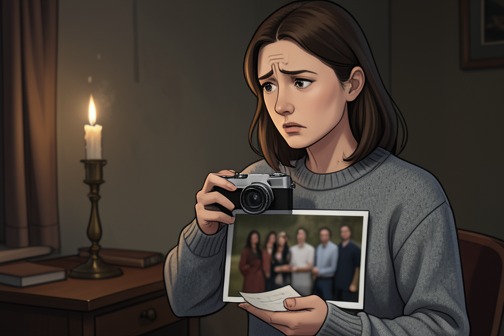
[Betsy Hill](entity:character-recall-character-betsy-hill-5ba525cdb1fc)’s discovery of the photograph from the night [Spencer Hill](entity:character-recall-character-spencer-hill-acd78d41b37e) died transforms a memorial-page slideshow into evidence of an unanswered question: Spencer had not been alone. A wrist sleeve in the image connects it to a detail Betsy remembers, and people moving in the background suggest that others were present. Her attempt to ask [Adam Baye](entity:character-recall-character-adam-baye-7f22fa60bcd3) what happened brings no explanation; he denies seeing Spencer that night and runs away. The photograph changes what Betsy believes she knows, but it does not resolve the circumstances of her son’s death.
## The memorial page and the work of grief
A few days after Spencer’s death, his classmates created Spencer Hill’s MySpace memorial page. It gathered photographs, collages, comments, and a graphic of a flickering candle in the place where a default profile picture would ordinarily appear. [Broken Radio](entity:expression-recall-expression-broken-radio-5667c42e45b2), one of Spencer’s favorite songs, played alongside a lyric displayed next to the candle. Betsy listened for a while as she looked through the page, encountering a public remembrance assembled by people who had known her son.
The page also sharpened her sense of how unevenly grief appeared. She had not checked it for three weeks, and there had been little new activity. Looking back through the comments, she felt that much of the visible mourning seemed more like a public performance than a measure of private sorrow. There was little from Spencer’s real friends, including Adam Baye. Betsy also considered the opposite possibility: people who were truly grieving might keep that pain to themselves. The page could show what classmates posted, but it could not tell her reliably who mourned or how.
A slideshow carried the photographs into view one after another. Each image stopped briefly before another seemed to circle down over it, as if the pictures were being tossed onto a growing pile. Betsy watched her son’s images rotate past and began to cry. That movement makes the eventual photograph both part of the memorial’s ordinary sequence and an abrupt interruption: she is looking at pictures of Spencer alive when one of them changes the meaning of what she is seeing.
## The image that changes the question
Betsy first catches sight of the photograph as it rotates into the slideshow, but it is gone almost immediately, covered by the next images. She remembers the detail that distinguishes it: Spencer has a drink in his hand, and the same hand wears a wrist sleeve. The sight recalls an intramural game from seventh grade, when Spencer had worn an ACE bandage after spraining his wrist. Betsy had already been thinking about that earlier incident and its resemblance to something that happened the day before Spencer’s suicide. The sleeve therefore does more than identify Spencer in a picture; it gives Betsy a concrete reason to connect the image to the final period of his life.
She finds a way to view the photographs as thumbnails and scans the collection. The page contains 127 images. Her hand shakes as she moves the cursor to the one she wants and opens it at full size. Looking at the enlarged photograph, she recognizes that it was taken on the night Spencer died. Then she looks beyond Spencer to the background, where people are milling about. That detail overturns the assumption that he had been alone. The discovery does not identify what those people were doing or establish what happened that night, but it makes the absence of witnesses no longer a safe assumption.
## Betsy confronts [Adam](entity:character-recall-character-adam-7e6d3c5ddcc8)
After the discovery, Betsy sees Adam Baye walking alone with his backpack weighing him down. She steps into his path, adjusting her position so that he will have to notice her. When he comes close, she greets him and asks what happened that night. Adam initially responds as if he does not understand the question. Betsy insists that he was with Spencer and holds up the photograph, trying to direct his attention to it.
Adam keeps looking down. When Betsy presses him to look again, he denies knowing what she is talking about and says that he did not see Spencer that night. He then says he has to go. Betsy pleads with him, but he apologizes and runs away, heading back toward the brick building and out of sight. His denial is not an answer to the larger question: the evidence described here does not show what he knew, why he left, or what the people in the photograph had witnessed. What it does show is the distance between Betsy’s urgent need to understand and Adam’s refusal, at that moment, to engage with her.
## An unresolved search
The photograph’s discovery becomes part of Betsy’s continuing effort to understand Spencer’s final night. Later, she sits on the floor of his room holding his old cell phone, its battery long dead. The day after Spencer was found dead, she had stopped [Ron Hill](entity:character-recall-character-ron-hill-b22d4727ae7f) from packing away the room, just as he had packed away Spencer’s kitchen chair. Betsy had spent days after the suicide curled on the floor and sobbing; she had pressed her face into Spencer’s pillow, but his scent was gone. The room and the phone preserve tangible traces of her son, while the photograph has made those traces point toward a question about other people and a particular night.
Betsy tells Ron that she needs to find out what really happened. She recognizes that an answer will not bring Spencer back and may not make either of them feel better, but she believes they need to pursue it anyway. In a later phone call, a tearful boy tells her he saw her and his mother on the roof. Betsy asks whether the caller is Adam, who apologizes. The exchange does not establish what Adam is apologizing for, nor does the evidence here settle what happened on the night of Spencer’s death. The photograph’s decisive consequence is therefore not closure but a changed inquiry: Betsy has learned that Spencer was not alone, and she cannot return to treating that night as if no one else might know more.
Event 4
Lucas Loriman's biological father is revealed
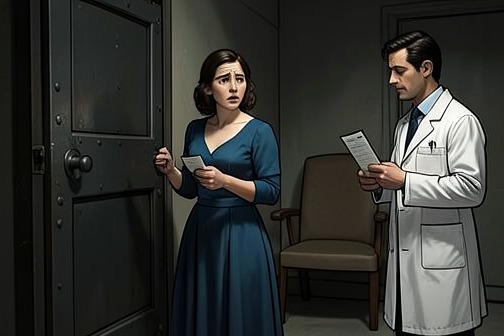
[Lucas Loriman](entity:character-recall-character-lucas-loriman-b0dd6da517c7)’s paternity revelation makes a private family secret medically urgent. When tests show that [Dante Loriman](entity:character-recall-character-dante-loriman-660fac157af7) is not Lucas’s biological father, the discovery changes the search for a kidney donor: the closest genetic relative may offer the best chance of a match, but Susan cannot identify that person. The event therefore exposes not a settled identity but a consequential absence—one that complicates the meanings of fatherhood, responsibility, and medical care.
## The Medical Problem Behind the Revelation
Lucas needs a kidney transplant, and the available donor options are poor. At a consultation, [Ilene Goldfarb](entity:character-recall-character-ilene-goldfarb-c1b3ba10d064) explains that the medical team has performed tissue typing and compares possible donors by their HLA antigens. A six-antigen match is ideal; the closer the match, the less likely Lucas’s body is to reject the new kidney and the lower the chance that he will face a lifetime of medication and constant dialysis.
Dante volunteers to be tested as a donor, evidently assuming that being Lucas’s father makes him the natural candidate. The results overturn that assumption: Dante is not a good match. Susan is a better match, but her match is only two, and Ilene does not consider her an ideal donor. Lucas’s younger brother Tom is also considered, but the news about him is unfavorable. The team will place Lucas on the cadaver kidney transplant bank, though Ilene warns that finding a better candidate there is unlikely. The revelation thus arrives within a narrowing set of medical possibilities, not as abstract family history.
## From Nonpaternity to an Unknown Father
The disclosure begins when Ilene tells [Mike](entity:character-recall-character-mike-cb6fa8ab1468) that a neighboring family has a serious problem. At the consultation, she states plainly that Dante is not Lucas’s biological father. Mike is stunned, but the implication quickly becomes practical: if Dante cannot offer a strong match, the biological father is the most obvious person to test. Mike and Ilene recognize that they cannot simply bury the result while Lucas still needs a donor. They make testing that biological relative their first priority.
That priority does not mean the family already knows whom to approach. When Mike later explains to Susan that Lucas’s closest biological relatives need testing, she immediately understands that Dante is not the person in question. Mike confirms it. Susan closes her eyes, and then asks whether he intends to tell Dante. Mike says he does not think so, but his hesitation leaves the decision unsettled. The conversation makes clear that the medical team has discovered a disqualifying fact about Dante without discovering the identity of Lucas’s biological father.
The distinction matters throughout the revelation. Biology gives the doctors a potentially useful category—a close relative whose tissue might match—while Susan cannot supply a name. Later, when Ilene asks who Lucas’s father is, Susan answers that she does not know. The reply leaves the problem unresolved rather than turning the paternity discovery into a complete account of Lucas’s origins.
## The Limits of Disclosure
Mike frames his approach to Susan around Lucas’s health. He says the purpose is not to pry or break up a family, but to find the best possible transplant donor. For him, the order of priorities is explicit: Lucas’s health comes first, and that makes testing the biological father necessary. Susan’s distress registers in her lowered head, wet eyes, and bitten lip, but Mike does not treat her pain as permission to abandon the medical question.
The discussion also tests the boundaries of a physician’s concern. Mike asks Ilene to consider whether she would inform Dante if a test revealed a serious medical problem in him, even though Dante is not her patient. Ilene initially emphasizes that such information is irrelevant to Lucas’s health. Mike’s hypothetical presses on the difference between what the clinic needs to know for treatment and what another person may have reason to know about himself. The scene does not resolve every ethical consequence of disclosure; instead, it shows the tension created when information about biological kinship becomes relevant to a patient’s chance of survival.
## Care Beyond the Genetic Match
The search does not stop with the revelation. Susan and Dante plan a donor drive at Lucas’s elementary school, where Susan has spoken with teachers who support the idea. They intend to hold it the following Saturday and encourage people to register with the donor bank. The effort shifts the search outward: if the family cannot identify a suitable biological donor, a wider community may still produce one.
Later, Susan approaches Mr. [Lewiston](entity:character-recall-character-lewiston-f028f25e1611) with a donor nurse present and asks whether he will give blood. She says that he had called the police after realizing what his former brother-in-law was doing, and urges him to take a step toward rebuilding his life by helping Lucas. The scene offers a possible avenue of assistance, but it does not confirm that Mr. Lewiston is Lucas’s biological father or that his blood will make him a suitable kidney donor. That distinction preserves the event’s central uncertainty: the revelation has made genetic connection urgent, while the identity and usefulness of a particular donor remain open.
## Significance
The paternity revelation separates biological fatherhood from the care already given to Lucas. Dante’s willingness to volunteer does not make him a good genetic match, while the person who might be biologically closest remains unidentified. The transplant process gives that difference immediate consequences: tissue typing turns kinship into measurable compatibility, but those measurements cannot by themselves establish a family’s history or settle what should be disclosed.
Susan’s uncertainty and the family’s donor efforts keep the event from resolving into a simple secret exposed. The truth changes the medical strategy, complicates the question of what Dante should be told, and sends the search beyond the household—from an unknown biological relative to a donor bank and a community drive. The revelation’s decisive force lies in this combination of discovery and incompletion: the doctors learn who Lucas’s father is not, but the family still has no answer to the question of who he is.
Event 5
Lauren Muse challenges the classification of the body as a sex worker
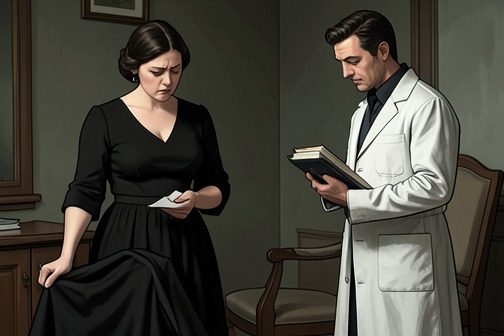
[Loren Muse](entity:character-recall-character-loren-muse-5c463b30f942)’s challenge to the classification of the unidentified woman as a sex worker shifts the investigation from accepting the scene’s apparent story to testing whether its details hold together. Her examination of the clothes, records, footwear, and a misplaced item exposes several contradictions in the initial interpretation and raises the possibility that the body had been staged.
## The Initial Classification
The victim had been treated as a prostitute, an assumption reflected in the clothes in which she was found: a pink bra top, a tight leather skirt, and stiletto heels. Muse examines those garments but does not take their appearance as proof of the woman’s identity or occupation. Instead, she concludes that the scene’s presentation is wrong and makes the classification itself the starting point for reassessment.
The distinction matters because the clothing appears to supply a ready-made explanation for who the woman was. Muse’s objection separates that visual impression from the evidence needed to support it. Rather than allowing the outfit to settle the question, she tests the label against details that can be checked independently.
## Evidence Against the Assumption
Muse brings the investigation beyond the appearance of the clothes. She reports that she reviewed three months of arrest files for the area and found no Caucasian person arrested for solicitation within a three-block radius. She also points out that the victim’s fingerprints were not on file. Neither fact alone establishes the woman’s identity, but together they weaken the assumption that she was a local sex worker whose circumstances would fit the scene’s apparent account.
The shoes provide a more immediate contradiction. Muse has a photograph enlarged and uses it to show that the stilettos have not a single scratch. They are too new to have been worn, she argues; no one has walked in them. Their immaculate condition makes the outfit look less like a record of the woman’s ordinary life and more like part of a deliberate presentation. The footwear therefore becomes evidence not because of what it says about the victim’s occupation, but because its condition fails to match the impression the clothing is meant to create.
## A Scene That Does Not Add Up
Muse also challenges the explanation for a hat left at the scene. She rejects the idea that the victim pulled it off someone’s head during a struggle. Her reasoning turns on the body’s having been moved: if the hat had come loose in that way, she asks, why would it have been left behind when the body was dumped? She treats the item as an obvious plant rather than a reliable trace of a struggle.
Taken together, these details change the meaning of the scene. The untouched shoes cast doubt on the apparent identity supplied by the outfit; the records offer little support for that identity in the immediate area; and the hat’s placement conflicts with the account that it was torn off during an encounter. Muse does not identify who staged the scene or establish the victim’s true identity in this exchange. Her case is narrower but consequential: the available details do not justify treating the initial classification as fact.
## Institutional Consequences
Muse’s presentation takes place amid a dispute over the investigation. After the evidence is raised, [Paul Copeland](entity:character-recall-character-paul-copeland-1f129b460ff7) publicly rebukes [Frank Tremont](entity:character-recall-character-frank-tremont-3c1fa31f1767) for going after a superior when the facts do not support him, then directs him to take the rest of the day off and consider his options, including retirement. The exchange shows that correcting the record is not only a matter of interpreting evidence; it also unfolds within a hierarchy where disagreement carries professional consequences.
The scene’s force lies in the contrast between a confident label and the small material details that undo it. Muse’s enlarged photograph, the unworn shoes, the arrest files, and the misplaced hat make the initial story harder to sustain. Her challenge does not solve the case, but it prevents the victim’s staged appearance from standing in for proof and redirects attention toward the possibility that the scene itself was constructed to mislead.
Event 6
Reba Cordova’s abduction
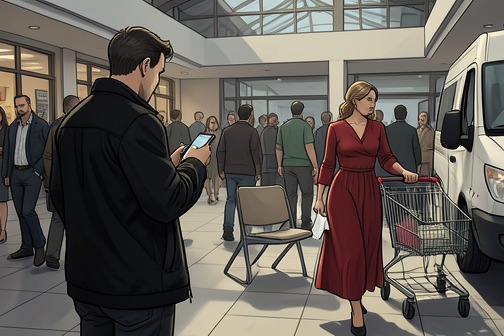
[Reba Cordova’s abduction](entity:event-recall-event-31b5721bb22e) begins in the ordinary bustle of a suburban shopping trip and ends with her captive in Nash’s van. Nash and Pietra use a staged request for help with a car seat to draw Reba close to the vehicle; once she is inside his reach, he takes her by force. The scene’s decisive turn comes when Nash names Jamie, Reba’s child, as a possible next target, and then brings up [Marianne](entity:character-recall-character-marianne-bce7426f25b0). The abduction is not only a physical seizure but the start of a campaign of intimidation whose purpose is not yet explained.
## Setting and Preparation
Nash waits in the lot at the [Palisades Mall](entity:location-recall-location-palisades-mall-ad8bcad394d2) in Nyack, a vast commercial complex whose scale is emphasized through its warehouse clubs, chain bookstores, two large movie theaters, major retailers, and full-size Ferris wheel. Reba has gone into [Target](entity:organization-recall-organization-b62739e95722). The crowded, familiar setting gives Nash opportunities to approach without immediately drawing attention, while its ordinary public character contrasts with the danger he has arranged there.
Nash watches Reba return with a red shopping cart carrying several plastic bags. He studies her apparent ease and the suburban life he associates with her, wondering whether such happiness is real and what women and the men who provide for them expect from it. His thoughts establish a contemptuous, judgmental gaze toward the people around him. Pietra is already nearby, keeping her distance from Reba, while Nash has positioned the van’s side door beside the driver’s side of Reba’s Acura MDX. The placement makes a brief encounter at the car possible without requiring him to pursue her through the mall.
## The Staged Request
Nash pretends to be confused by a car seat and its manual. He raises the manual and asks Reba to take a quick look, presenting the request as a small favor rather than an alarming demand. His performance depends on appearing harmless: he smiles, acts uncertain, and lets the situation resemble an ordinary exchange between adults in a parking lot. The car seat makes his appeal plausible, while the manual gives Reba a specific reason to come closer.
Reba hesitates. Nash recognizes that she is a stranger approaching another stranger, but he also relies on the social pressure to be polite in a public place. Her decision takes only seconds; she returns to the car after putting her shopping bundles in the back. Nash leans into the van and indicates that a strap may be the problem. The scene makes the trap’s mechanism clear: he does not force Reba toward him at first. He constructs a moment in which helping seems reasonable, then depends on her proximity to carry out the abduction.
## Abduction and Control
When Reba leans into the van, Nash acts quickly. He reaches toward the area behind her ear and covers her mouth, rendering her unable to call out; within moments she is still. Pietra follows the plan, shuts Reba’s car door, and takes the driver’s seat of the van. Nash takes Reba’s keys and uses the remote to lock her Acura. These practical movements complete the transition from public encounter to captivity: the parked car is secured, the van is ready to leave, and Pietra is at the wheel.
Nash gives Pietra the keys and explains why Reba’s car should be moved. If it remains where it is, investigators may realize that this was the place she was taken; moving it might confuse them. He then binds Reba with plastic cuffs and puts a cloth in her mouth. The sequence shows that concealment is part of the abduction from its earliest moments. Nash is not simply leaving the scene; he is trying to make the location of the seizure harder to establish.
## Threats and the Name Marianne
Once Reba is restrained, Nash addresses her directly and makes Jamie the instrument of his threat. He warns that if she escapes, he will take the child instead, and Reba freezes when she hears Jamie’s name. The threat changes the terms of her captivity: Nash seeks to control not only her immediate movement but also any attempt she might make to resist. The scene identifies Jamie as Reba’s child and shows how Nash uses that bond to enforce compliance, without establishing what he intends to do with either of them beyond the threat.
Nash later tells Reba that he will get to the matter at hand and asks whether the name Marianne means anything to her. Reba reacts with terror, but the exchange does not explain her connection to Marianne or what Nash believes she knows. He says he is going to hurt her, then enters the back of the van and carries out that threat; the account confirms the violence without specifying the information he seeks or whether Reba provides it. The name therefore functions as a pointed but unresolved link: the abduction has moved from concealment and control toward questioning, while the reason Reba has been singled out remains undisclosed.
## Narrative Significance
The abduction is built around a sharp reversal of ordinary social behavior. A request for help, a car seat, and the expectation of courtesy make Reba’s approach seem routine, but Nash has arranged each detail to turn that routine into an opportunity. Pietra’s distant position, the van’s placement, and Nash’s performance all contribute to the plan; the apparent spontaneity of the encounter conceals its preparation.
The scene also distinguishes Nash’s practical calculation from the personal pressure he applies after the seizure. He thinks about moving the car to confuse the search, yet his most immediate leverage is intimate: he knows Jamie’s name and uses it to frighten Reba into stillness. His question about Marianne adds another unresolved stake. By ending this episode with a threatened interrogation and a name that provokes fear, the narrative makes the abduction both a completed act and the beginning of a mystery about what Reba knows and why Nash has come for her.
Event 7
Mike’s GPS search for Adam
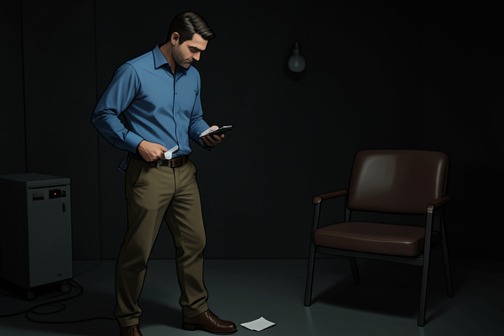
[Mike’s GPS search for Adam](entity:event-recall-event-7e24003879d1) turns a parent’s uncertainty into a pursuit across [New Jersey](entity:location-recall-location-39f2e21cff7b) and into the Bronx, but the technology locates a phone, not the person carrying it. Its map gives [Mike](entity:character-recall-character-mike-cb6fa8ab1468) a route to follow; it cannot tell him why [Adam](entity:character-recall-character-adam-7e6d3c5ddcc8) has gone, who is with him, or whether a glimpse of another boy will bring him closer to his son.
## The Empty Room
Mike’s search begins when he opens Adam’s bedroom door and finds it empty. There are no clues to where Adam has gone. Mike checks the time: Adam should already have been home, and he should not have left his younger sister, [Jill](entity:character-recall-character-jill-c58a30f04db5), alone. He calls Adam’s cell phone, reaches his voicemail, and leaves an urgent message asking where he is and telling him to call back. Mike also reminds him that they are supposed to leave soon for the Rangers. The ordinary plan sharpens the absence: Adam is not merely late for an unspecified reason; he has failed to return when his family expects him.
At first, Mike has no location to act on and no answer from Adam. The change comes when he is reminded that his cell-phone model has GPS. A phone equipped with the system can be located through a carrier’s service, making the device a possible lead when its owner cannot be reached. The locator promises precise information, but that promise also sets a limit on what Mike can know: a position on a map is evidence of where the phone is, not an explanation of Adam’s choices.
## Turning the Phone into a Map
The technology is distinguished from the cell-tower triangulation familiar from television. Its earlier forms included the SIDSA Personal Locator, used to locate people with Alzheimer’s disease, and uFindKid, which applied the idea to children’s phones; Mike is told that GPS chips are now built into almost every phone offered by phone companies. The progression from a locator carried in a pocket to a feature embedded in a child’s phone makes tracking seem like a routine service. In Mike’s immediate crisis, that routine becomes a means of extending parental reach beyond the home.
Mike goes online to his carrier’s site, enters his phone number and password, and opens the GPS program. The service offers a month for $49.99, six months for $129.99, or a year for $199.99. He begins weighing the plans as if this were an ordinary purchase, calculating which is the better value, then chooses the monthly option. He cannot bring himself to imagine still needing the service a year later. That small calculation catches the collision between a commercial menu and a crisis: the interface asks him to think in subscription terms while he is trying to find his missing son.
Once the approval goes through, the map initially shows the entire United States, then narrows as Mike zooms from the country to the region, state, city, and street. A large red dot appears on a street near him. The closest-address box confirms what he already knows: Adam’s phone is at the Huffs’ house. The first result gives Mike a destination, not an account of what Adam is doing there. But it changes the search from an unanswered call into a location Mike can check.
## Following the Moving Signal
Later, the locator’s red dot is blinking. Mike understands from the tutorial that this means the phone is moving, probably in a car. The service does not transmit continuously because doing so would drain the battery; it sends a location update every three minutes. If the phone remains still for more than five minutes, the GPS turns off and starts again when it senses motion. The map therefore offers a trail in intermittent reports rather than an uninterrupted view, a technical limitation that leaves Mike interpreting gaps as well as locations.
The dot shows Adam’s phone crossing the George Washington Bridge, proceeding along the Cross Bronx Expressway, and then down the Major Deegan into the Bronx. Mike does not know the area. About twenty minutes later, the signal appears to stop on Tower Street, and he has to decide whether to remain where he is and keep watching the map or drive in and try to find Adam. The locator has supplied a direction and a stopping point, but not a person Mike can approach or a reason for the trip.
Mike consults MapQuest, which estimates a forty-nine-minute drive from home, and decides to go. He takes his laptop with built-in wireless so that, if Adam’s phone has moved, he can search for another wireless network and check the locator again. On Tower Street, he finds no wireless network available. The plan depends on the very connectivity that allowed him to track Adam from a distance; in the Bronx, the map cannot be refreshed simply because Mike has arrived at the reported location.
## A Search Without Confirmation
Mike scans the block for Adam, someone familiar, or a vehicle he recognizes. As he turns, a varsity jacket catches his eye. He sees [DJ Huff](entity:character-recall-character-dj-huff-387c2d8e173f) walking in the other direction and follows, but DJ is soon out of sight. Mike estimates that only one club entrance is visible along the stretch and reasons that DJ must have gone inside. The club’s queue is exceptionally long, with roughly a hundred young people waiting, while a bouncer lets a group arriving by limousine pass through the velvet rope. Mike’s attention to the entrance becomes another attempt to read a crowded place for a clue.
The sighting does not establish that Adam is with DJ or that DJ can lead Mike to him. Mike has followed a mobile phone across a bridge and through the Bronx, then reached Tower Street with no wireless connection and no direct contact with Adam. Seeing the varsity jacket gives him a person to pursue for a moment, but DJ disappears into the crowd and the club remains only a possible destination. The available episode ends without Mike finding Adam. Its decisive result is therefore mixed: tracking converts distance into an actionable route, yet the last steps still depend on imperfect signals, local judgment, and a sighting that does not resolve the boy’s whereabouts.
Event 8
Adam Baye's disappearance
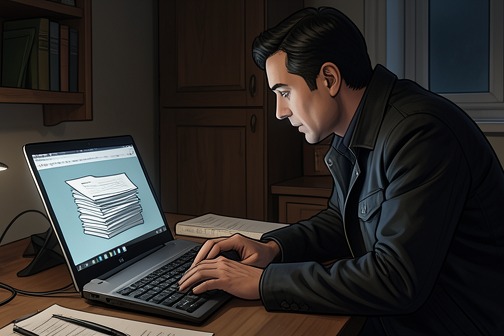
[Adam Baye's disappearance](entity:event-recall-event-adam-baye-s-disappearan-8c0e133925d4) is the crisis that drives [Mike Baye](entity:character-recall-character-mike-baye-1470215d703d) and [Tia Baye](entity:character-recall-character-tia-baye-5661a1b93f78) from anxious monitoring into a public, increasingly uncertain search. Their efforts depend on digital traces—a keystroke-reporting program and a phone locator—but those tools do not simply reveal where [Adam](entity:character-recall-character-adam-7e6d3c5ddcc8) is. They also expose the family’s private information, direct [Mike](entity:character-recall-character-mike-cb6fa8ab1468) toward a place where he is attacked, and leave the police to distinguish what is known from what is only suspected.
## From monitoring to a location
The crisis grows out of a change in Adam that Mike has not been able to explain. Hockey had once bound father and son: Mike had played at [Dartmouth](entity:organization-recall-organization-dartmouth-55c26b07688a), passed the sport on to Adam, and spent many hours shooting pucks with him. Adam became a goalie and a promising junior player, but six months earlier he had abruptly quit. In that period of withdrawal, Mike and [Tia](entity:character-recall-character-tia-31eb59c37882) resort to monitoring his computer. Brett explains that the software records keystrokes and gathers a report of websites, emails, instant messages, and documents, which can be emailed to the parents; it also offers a live-view option. Surveillance promises access to what Adam will not tell them directly.
A phone locator offers a second route to information. Mike learns that the system uses GPS rather than the television-style cell-tower triangulation he first imagines. The technology had been used to locate people with Alzheimer’s disease and was later adapted for children’s phones; by then, GPS chips were built into almost every phone. Mike pays for a month of service, choosing the $49.99 option rather than committing to a longer plan. The locator progressively zooms from a map of the United States to [New Jersey](entity:location-recall-location-39f2e21cff7b), then to a street address. The result is precise: Adam’s phone is at the home of [Daniel Huff](entity:character-recall-character-daniel-huff-6393a3de812f)’s family.
That pinpoint arrives with no explanation of what Adam is doing there or whether the location is safe. The map can place a phone, but it cannot interpret the person’s intentions. Mike’s effort to find his son therefore begins with a lead that looks conclusive while leaving the central questions unanswered.
## Absence becomes an emergency
While Mike is away, Tia is in Boston preparing for a deposition. At three in the morning she tries his phone again and gets no answer. She checks that her phone is receiving a signal, calls the house, and tries Adam’s cell. Her panic grows, though she tries to hold it back: Adam is missing, but Mike is also unreachable. Her sense of Mike as capable and protective makes his silence more alarming, not less.
When police speak with the family, Tia can see that they are not accepting Adam’s disappearance as a straightforward case of a missing teenager. She asks about an Amber Alert, but the conversation does not give her the assurance she wants. The officers have an important piece of evidence: Adam’s phone has been found in a trash can not far from the place where Mike was attacked. They tell Tia that one likely explanation is that Adam saw his father there and realized the locator had been used to find him. The detective is careful to distinguish that theory from established fact. The phone’s location links the two episodes, but it does not prove who discarded it or what Adam saw.
Mike, meanwhile, remains focused on the search even after the attack leaves him in hospital. As he begins to recover consciousness, his thoughts return to one question: where Adam is. Later, when asked what he was doing at [Club Jaguar](entity:location-recall-location-club-jaguar-0f17571f62ac), he answers that he was looking for his son. His search has taken him into a setting where he nearly gets into a fight and where federal agents intervene; the immediate purpose he gives for being there is not personal business but Adam’s disappearance.
## A search complicated by surveillance
Mike tells Tia what happened at Club Jaguar, including his meeting with [Rosemary McDevitt](entity:character-recall-character-rosemary-mcdevitt-4b43f4aa6810), the near-fight, the federal agents’ intervention, and the interrogation. He urges Tia to think about the instant messages from CeeJay8115. This brings the search back to Adam’s online activity: the family’s monitoring system and the messages may offer leads, but the information is scattered across communications and places that require interpretation.
The software itself becomes another source of doubt. Tia considers how little she can verify about Brett’s access and the reports he has shown her. If he set a password, she wonders, he might be able to enter the program and read the reports himself; she has no independent way to know exactly what is on the computer or who can access it. Her concern broadens to the records kept by companies, stores, computer makers, and search engines. The tools meant to make Adam visible may also make the family’s own activity visible to someone else. The disappearance thus exposes an imbalance: a parent can purchase a service and receive data, but cannot be certain who else can inspect that data or what conclusions it warrants.
The discarded phone crystallizes the limits of the search. GPS had given Mike an exact street, yet the later discovery of the phone does not disclose Adam’s next destination. Nor does it settle whether Adam saw Mike being attacked. Police suspicion, technical evidence, and parental fear accumulate together without becoming the same thing as proof.
## Adam’s absence and the family’s unresolved questions
Mike continues asking for help, telling Anthony that Adam is sixteen, still missing, and in considerable danger. The words make plain how the search has changed from trying to check on a son’s whereabouts to seeking information from people who may know where he has gone. The police inquiry and Mike’s attempts to follow leads proceed alongside one another, neither offering the family a complete account.
Later scenes place Adam within the emotional history surrounding [Spencer Hill](entity:character-recall-character-spencer-hill-acd78d41b37e)’s death. Adam tells Mike and Tia that what happened to Spencer was his fault. In another scene, [Betsy Hill](entity:character-recall-character-betsy-hill-5ba525cdb1fc) waits for Adam in the woods behind her house, an overgrown patch that still holds traces of the place Spencer and his friends once used. Alone on a hill, Adam hears Spencer’s voice in the messages he kept on his phone and listened to every day. These moments connect Adam’s absence to guilt and grief, without making those feelings an explanation for every choice or resolving the questions raised by the locator.
The event’s force lies in the gap between finding a signal and finding a person. A red dot can send Mike to an address; a discarded phone can draw police attention to a possible link; messages can suggest where to look next. None can substitute for Adam’s account of what happened. As the search continues, the family’s attempt to protect him becomes inseparable from the problem of trust: the parents seek knowledge through surveillance, while the evidence itself repeatedly warns them that access to information is not the same as understanding.
Event 9
Reba Cordova's abduction and murder
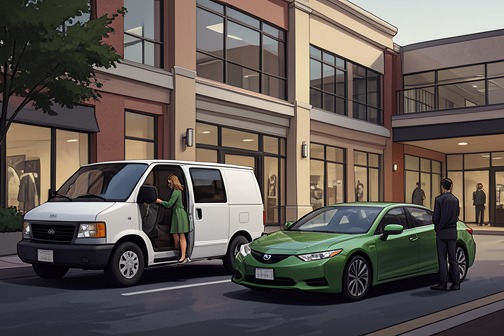
[Reba Cordova's abduction and murder](entity:event-recall-event-reba-cordova-s-abductio-5ecf469a875b) turns a seemingly ordinary departure from the [Palisades Mall](entity:location-recall-location-palisades-mall-ad8bcad394d2) into a calculated disappearance. A witness sees a woman enter a white van without apparent force, while another woman takes her Acura and leaves alongside the van. Later, Nash and Pietra conceal Reba’s body, and Nash shapes the surrounding clues to make her absence harder to investigate. The event’s decisive turn is not merely that Reba is killed, but that Nash intends her body never to be found.
## The Mall Witness and the Disappearance
A report from the Palisades Mall security office supplies the last known public sighting. At around five in the afternoon, a man tells security that he saw a woman in a green Acura MDX walk to her car and load items into it. She then approached a man’s white van and got inside. The witness noticed no visible force; the van door closed, and the encounter initially seemed unremarkable to him.
What made the sequence unusual was what followed. Another woman arrived and got into the Acura, after which the van and the Acura drove away together. The account does not identify the second woman or explain what she knew. It does, however, place Reba’s vehicle and the van in the same departure, giving investigators a concrete connection between a last sighting and the vehicles involved in her disappearance. The apparent lack of force at the mall offers no assurance of safety: the observed movement into the van becomes the beginning of a crime whose coercive reality is apparent only through what Nash later does.
## Nash’s Decision to Hide the Body
At the U-Store-It facility on [Route 15](entity:location-recall-location-route-15-ec0326d1b37f) in Sussex County, Nash backs a truck into the loading dock of his storage unit after dark. He has put Reba’s body in a trash can as a precaution against being seen. The place is suited to concealment, and Nash considers the possibility that someone might look for her. He knows that missing people can be kept in storage units, and that a person’s disappearance may leave investigators with no immediate access to the victim or a clear account of what happened.
Nash’s handling of Reba is shaped by his earlier decision to leave [Marianne](entity:character-recall-character-marianne-bce7426f25b0)’s body where it could be discovered. He had beaten Marianne beyond recognition, but has not damaged Reba’s face. He understands that Reba is more likely to be identified: her husband may already have reported her missing, and a newly discovered body would give police reason to suspect that it was hers. The contrast is practical rather than accidental. Nash expects the body itself to lead investigators toward Reba, so he decides that it must not be found.
He and Pietra place Reba’s body in a mixture of wood chips and manure, intending to keep it there for a while. The scene establishes the outcome without depicting the killing itself: Reba is dead, and her body is being deliberately hidden. The narrative therefore shifts the focus from the act of violence to the choices made afterward, as Nash turns concealment into the central method of evading discovery.
## Misdirection and Concealment
Nash leaves Reba’s car in a hotel parking lot, hoping that police will read its presence as evidence of an illicit meeting. He anticipates that they may investigate whether she had a boyfriend and concentrate on that possibility. He also imagines that, without a body, they might eventually treat her as a runaway. These are Nash’s predictions, not a report of what the police ultimately conclude; the plan depends on directing attention toward a false or unverified explanation while withholding the evidence that could identify what happened to her.
He takes additional steps to avoid drawing attention to the van. Rather than steal another license plate, he changes one letter on its plate with black electrical tape. In the storage shed, he has other disguises available, including magnetic signs advertising Tremesis Paints and the Cambridge Institute. Instead, he selects a religious bumper sticker he can remove later. Its conspicuous message is intended to attract notice away from the less noticeable alteration to the plate. The detail makes his strategy explicit: what appears most memorable to an observer can serve as a distraction from the identifying information Nash wants overlooked.
## Consequences and Significance
The episode establishes a deliberate difference between the treatment of Marianne and Reba. Marianne’s body is left where it can be found; Reba is meant to vanish. Nash expects that Reba’s face, her missing-person report, and her abandoned car could otherwise help the police connect her to the crime. His plan instead separates those clues: the car suggests a possible private meeting, while the hidden body prevents confirmation of her fate. He specifically expects that no body will mean no clear basis for connecting Reba to Marianne.
Pietra is present as Nash carries out the concealment. He tells her that he made a promise to [Cassandra](entity:character-recall-character-cassandra-64055e2aac8a) and asks whether she feels bad about what is happening. Pietra gives no answer. The exchange offers neither an explanation of the promise’s terms nor an explicit account of Pietra’s feelings; its significance lies in the contrast between Nash’s appeal to an obligation and the practical preparations both make around Reba’s body. The event leaves Reba dead and hidden, with Nash relying on misdirection to prolong her disappearance and keep the connection to Marianne from coming to light.
Event 10
Marianne's murder and staged body
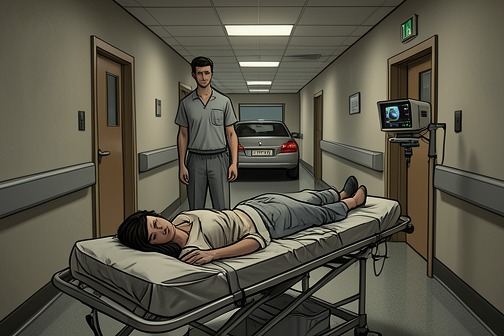
[Marianne's murder and staged body](entity:event-recall-event-marianne-s-murder-and-s-2a6e959afea9) make the discovery of her remains part of the crime’s design. The killer leaves investigators with a false account of who she was, while the later recognition of her as [Marianne](entity:character-recall-character-marianne-bce7426f25b0) overturns that presentation and gives the Jane Doe investigation a name. The staging also becomes a point of comparison with [Reba Cordova’s disappearance](entity:state-recall-state-reba-cordova-s-disappea-a5eb5d5418d4), revealing how deception connects the cases even as Nash tries to keep them separate.
## The unidentified victim
At the [Essex County Chief Investigator's Office](entity:organization-recall-organization-85e67c52615c), [Loren Muse](entity:character-recall-character-loren-muse-5c463b30f942) is still waiting for the NCIC fingerprint results on the Jane Doe. She checks the homicide board and finds no new cases, but the absence of an identification leaves the woman’s identity unresolved. A working surveillance camera near the murder scene offers another possible route: if the body was transported by car, the vehicle might appear on the recording. The prospect is useful but daunting, since the tape could contain hundreds of vehicles and no obvious sign of which one matters.
That investigative uncertainty is the first consequence of the staging. The body is not simply evidence of a killing; the false identity attached to it threatens to direct the police toward an invented account of the victim’s life. Until the fingerprints or another clue establish who she is, investigators must work around the killer’s deception rather than from a known identity.
## A false identity by design
Loren identifies deception and diversion as a connection between the Jane Doe case and Reba Cordova’s disappearance. The two missing women are described as well-to-do women in their forties who vanished within roughly a day of one another. The similarity draws attention, but the stronger link is the deliberate use of misleading clues in both cases.
In Marianne’s case, the killer has staged the scene to make investigators believe she was a sex worker. This is not an incidental misreading of the evidence in Loren’s account: it is an elaborate effort to steer the investigation toward a false understanding of the victim. The presentation of her body therefore acts as a planted explanation, one that obscures her identity and invites the police to interpret her through the role the killer has assigned her.
## Nash’s contrasting strategy
Nash’s thoughts explain the practical logic behind the different treatment of the two women. He has beaten Marianne beyond recognition, but he has not damaged Reba’s face. He expects Reba’s husband to report her missing and reasons that a recently discovered body, even one showing violence, would likely be identified as hers. Rather than repeat the approach used with Marianne, he decides Reba’s body should not be found.
He leaves Reba’s car in a hotel parking lot, expecting investigators to interpret it as evidence of an affair and a voluntary departure. If they pursue that explanation, they may focus on whether Reba had a lover; if no body appears, Nash believes they may have little to investigate and could assume she ran away. The contrast is deliberate: Marianne’s body is left for discovery under a false identity, while Reba is meant to disappear entirely. Nash’s change of method is intended to prevent a connection between the cases, though the shared use of deception gives Loren a basis for suspecting one.
## Recognition and reversal
The false identity finally collapses when [Neil Cordova](entity:character-recall-character-neil-cordova-beeae2bbb7a4) recognizes the Jane Doe. Asked by Loren Muse whether he knows who the woman is, he confirms that she is Marianne. His recognition supplies what the pending fingerprint search has not yet provided: a human identification that transforms an anonymous victim into a person known to the investigation.
The moment reverses the meaning of the staging. The killer’s effort to make Marianne appear to belong to a different life has delayed recognition, but it has not erased her identity. The case now joins the false clues surrounding the body to Marianne herself, and Loren’s comparison with Reba’s disappearance gains sharper significance: the killer has used different schemes, but in each, the misleading appearance is part of the crime’s concealment.
## Narrative significance
The event links physical evidence, investigative inference, and recognition. At first, the body’s presentation encourages a false classification; the uncertain fingerprints and the search for a vehicle show how that misdirection shapes the work of identifying her. Loren’s attention to the pattern across two disappearances then shifts the inquiry from isolated clues toward a shared method of deception.
The contrast between the discovered body and the body Nash intends to hide marks the limits of his control. He calculates that the police will follow the clues he plants, yet the repeated use of false explanations becomes a clue in itself. Marianne’s identification does more than resolve the Jane Doe’s name: it exposes the staged account as an obstacle deliberately placed between the victim and the truth.
Event 11
Identification of Marianne as Jane Doe
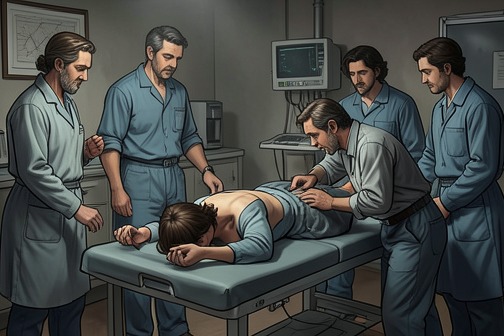
The identification of [Marianne](entity:character-recall-character-marianne-bce7426f25b0) as Jane Doe is the moment an unidentified victim acquires a name: [Neil Cordova](entity:character-recall-character-neil-cordova-beeae2bbb7a4) recognizes a birthmark on the back of her right ankle and identifies the woman as Marianne. The discovery comes not through a document or a formal comparison but through Cordova’s close attention to the body, and his visible reaction makes the recognition a personal shock as well as a change in the investigation.
## The examination
Cordova has been looking at the victim’s neck when his attention shifts to her legs. He asks [Loren Muse](entity:character-recall-character-loren-muse-5c463b30f942) to turn her over, explaining that he needs to see the back of one leg. The request redirects the examination from one part of the body to another; what matters is not the face or the area Cordova had first been studying, but a detail on the leg that is hidden until the body is turned.
Loren Muse looks to Tara O’Neill, who immediately brings over an orderly. Together they carefully turn Jane Doe facedown. Cordova steps closer, while Muse stays where he is so as not to disturb Cordova’s concentration. Tara O’Neill and the orderly then step away. The sequence gives Cordova room to examine the body without interruption, and makes his scrutiny—not an external pronouncement—the hinge of the scene.
## The identifying mark
Cordova’s eyes travel down the woman’s legs and stop at the back of her right ankle. There is a birthmark there. The narrative isolates this small physical feature after the movement and repositioning that expose it: the body must be turned, Cordova must look closely, and his gaze must reach the precise place where the mark can be seen. The birthmark is not presented as a general resemblance; it is the specific detail that enables Cordova to recognize the victim.
The pause after he finds it is part of the recognition. Seconds pass before Muse addresses him. Cordova then says that he knows who the woman is. His response first establishes certainty without yet supplying a name, holding open the interval between seeing the mark and speaking what it means.
## Recognition and consequence
Cordova’s body registers the force of the identification before he completes it. He starts shaking, his hand flutters to his mouth, and his eyes close. When Muse addresses him again, Cordova names the victim as Marianne. The gestures do not explain his history with her, which this scene does not provide; they do show that the identification is not emotionally neutral. Recognition interrupts the orderly examination and becomes a moment of personal distress.
The scene’s decisive change is from Jane Doe, an unidentified victim, to Marianne, a known person. A birthmark gives Cordova the means to make that change, while his hesitation and physical reaction reveal its human cost. The identification therefore does more than attach a name to the body: it turns an act of examination into an encounter with someone Cordova recognizes, and makes the victim’s identity newly legible to the investigation and to the reader.
Event 12
FBI detains Mike Baye
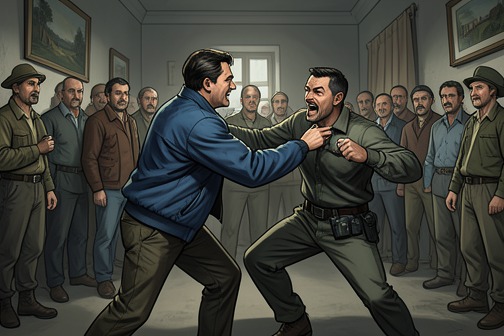
[FBI detains Mike Baye](entity:event-recall-event-fbi-detains-mike-baye-2b81ba265b7f) at the moment his search for [Adam Baye](entity:character-recall-character-adam-baye-7f22fa60bcd3) brings him into a physical confrontation with [Carson Bledsoe](entity:character-recall-character-carson-bledsoe-8399fe7f60e5). [Mike](entity:character-recall-character-mike-cb6fa8ab1468) is trying to get information about his missing son and accuses Carson’s group of having attacked him the night before; before Carson can provide an answer, federal agents interrupt and take control of the encounter. The turn leaves Mike’s urgent effort to find [Adam](entity:character-recall-character-adam-7e6d3c5ddcc8) suspended, with the men who had been watching him now openly identifying themselves as the FBI.
## The Search Turns Into a Confrontation
Mike presses Carson for an answer about Adam’s whereabouts, asking, “What did you guys do to my son?” When Carson responds that he does not know who Mike means, Mike makes the question specific: “My son, Adam Baye. Where is he?” Carson challenges the assumption that he would know. The exchange establishes Mike’s immediate objective—locating Adam—and the impasse he has reached: Carson offers no information, and Mike has no confirmed lead from him.
The conversation becomes physical before it becomes more informative. Mike pushes Carson in a taunting manner, then pushes him again. The other goths look confused and uncertain about what to do next. Mike accuses Carson’s group of having jumped him the previous night and warns Carson that he had better talk unless he wants a severe beating. The threat is conditional; the scene records Mike’s warning, not a beating of Carson. His attempt to make Carson answer instead puts Mike himself at the center of a confrontation that can be interrupted and redirected by someone else.
## The FBI Steps In
A new voice cuts across the argument with the command, “Everybody freeze! FBI!” Mike looks up and recognizes the two men as the same men in baseball caps who had been following them earlier. Their presence therefore changes meaning in an instant: they are not merely strangers appearing during the dispute, but the watchers whose earlier pursuit Mike now understands as federal surveillance. They hold guns in one hand and badges in the other, displaying both the authority to command the scene and the means to enforce that command.
One of the officers addresses him by his full name, “Michael Baye?” Mike answers, “Yes?” The officer identifies himself as [Darryl LeCrue](entity:character-recall-character-darryl-lecrue-8241b935ba7f) of the FBI and tells Mike, “We’re going to need you to come with us.” The exchange is brief and direct. The agents do not explain their purpose in the moment, and the scene gives no charge, destination, or account of what happens after Mike is told to accompany them. What it does establish is that the men who had followed Mike have now openly asserted federal authority over him.
## An Abrupt Reversal
The scene’s central reversal is in who controls the search. Mike has entered the confrontation as a father demanding answers about Adam, and his physical pressure on Carson is meant to make the other man talk. The FBI’s command stops that effort without resolving the question of Adam’s whereabouts. Mike’s attention shifts from trying to compel Carson to responding to agents who identify him by name and direct him to leave with them.
The two encounters are linked by the same unresolved absence: Adam is the person Mike is asking about, but no answer about his location emerges before the FBI intervenes. The interruption also recontextualizes the earlier sight of the baseball-capped men. Their prior following had been present in the background; their badges and guns make their role unmistakable once they step forward. The scene ends not with a lead about Adam, but with Mike’s own movement constrained by the federal agents. His search is still pressing, yet for the moment it is no longer his to conduct on his own terms.
Event 13
Joe Lewiston humiliates Yasmin Novak
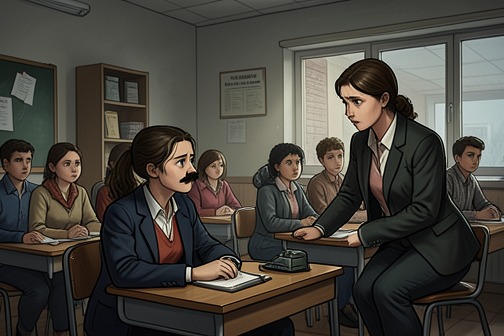
[Joe Lewiston humiliates Yasmin Novak](entity:event-recall-event-joe-lewiston-humiliates-aaf80b69691d) by making fun of her when she is eleven, an episode whose consequences outlast the visible feature at its center. The mockery leaves [Yasmin](entity:character-recall-character-yasmin-87ee93b28e1d) socially isolated and school feeling unbearable; later, her anger surfaces in a violent fantasy she shares with [Jill Baye](entity:character-recall-character-jill-baye-4e0454d5ed15). The harm also reaches beyond the two girls: [Guy Novak](entity:character-recall-character-guy-novak-20bfab365244) confronts [Dolly Lewiston](entity:character-recall-character-dolly-lewiston-170e01e0221e), and their exchange turns Yasmin’s humiliation into a conflict between families over accountability, protection, and retaliation.
## Background and the Lasting Harm
The insult is presented through its aftermath rather than a full account of the original encounter. [Jill](entity:character-recall-character-jill-c58a30f04db5) remembers the small mustache on Yasmin’s face as the feature that caused all the trouble. Yasmin’s mother, who lives somewhere in the South, possibly Florida, later takes her to a specialist and arranges electrolysis. The hair is gone, but the treatment does not make school less horrible. That contrast gives the incident its defining consequence: changing Yasmin’s appearance addresses the visible source of attention without undoing the social damage attached to it.
The account does not suggest that the procedure restores Yasmin’s ease or removes the memory of being singled out. Jill can still picture the mustache even after it has disappeared. Her recollection makes the past injury present in an ordinary moment between friends, while the continuing misery at school shows that the effects cannot be reduced to appearance alone. The event’s significance lies partly in this mismatch between a problem that can be treated medically and an environment that remains painful for Yasmin.
## Anger and the Confession to Jill
In a private conversation with Jill, Yasmin describes having imagined killing Joe. She considers different settings, including a classroom and Joe’s home, and imagines that other people might witness the act. She then rejects the public version of the fantasy as too closely associated with a type of school violence she does not identify with. The details establish the intensity and persistence of her anger, but Yasmin presents the thoughts as random and harmless and says she will not act on them. The passage therefore distinguishes a violent fantasy from a stated plan to carry it out.
Jill does not dismiss what Yasmin has said. She tells her that Joe will pay, and Yasmin agrees that she knows this. Their exchange makes the friendship an important setting for the event’s consequences: Yasmin can disclose thoughts she otherwise keeps private, and Jill responds by affirming that the humiliation should have repercussions. Yet their agreement does not specify what those repercussions will be. The scene leaves a tension between recognition of harm and the possibility that anger might turn toward further harm.
The surrounding actions sharpen that tension without resolving it. Jill carefully sets down the weapon. When a car arrives and Yasmin’s father calls from inside the house, Yasmin calmly puts the gun away in a drawer, arranges things, closes it, and goes to meet him. The ordinary arrival interrupts a charged private moment. Yasmin’s composure and the concealment of the weapon show that she understands the difference between what she has disclosed to Jill and what she reveals to her father; the scene does not establish that she intends to use it.
## The Conflict Reaches the Families
Guy’s later confrontation with Dolly makes explicit how deeply he believes the original humiliation affected his daughter. He asks whether Dolly knows what Joe did, and identifies the injury as Joe making fun of an eleven-year-old. Dolly acknowledges that her husband acted foolishly and is sorry, but Guy insists that the result was to make Yasmin’s life a living hell. Their disagreement is not over whether Joe’s behavior occurred; it is over whether an apology settles the matter and what Guy is entitled to do in response.
Dolly frames Guy’s actions as an attack on her family and warns that they will defend themselves. When Guy suggests she may mean a lawsuit, she makes clear that she is not speaking about court proceedings. She describes her warning as a fact and urges him to focus on caring for Yasmin rather than pursuing Joe. Guy does not retreat from his demand that Joe quit, while Dolly refuses to treat the conflict as something Guy alone can prosecute. The exchange broadens the consequences of the insult: a child’s school experience becomes the basis for an adult confrontation, and both parents cast their position as protection of someone they love.
## Significance
The episode links a small, specific act of ridicule to several different scales of consequence. For Yasmin, the mockery remains attached to an appearance that electrolysis can change but cannot make socially irrelevant. For Jill, it helps explain her friend’s anger and gives her a role as confidante. For Guy and Dolly, it becomes a dispute about apology, responsibility, and the limits of defending one’s family. These responses do not offer a simple resolution: Dolly says Joe is sorry, but Guy says the harm persists, and Yasmin’s account reveals anger that an apology has not erased.
The narrative places the insult’s aftermath in domestic settings—a conversation between friends and a confrontation between parents—rather than reproducing the original act as a standalone scene. This structure emphasizes duration: the decisive evidence of humiliation is not only what Joe did, but the continuing damage it leaves behind. At the same time, Yasmin’s insistence that her thoughts are harmless and Jill’s confidence that Joe will pay preserve uncertainty about how that damage will be answered. The event thus functions both as a past injury and as an active source of conflict, connecting Yasmin’s isolation to the wider struggle over how her family will respond.
Event 14
Spencer Hill's death
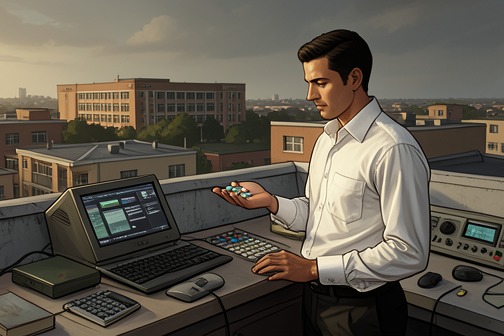
[Spencer Hill](entity:character-recall-character-spencer-hill-acd78d41b37e)’s death by suicide is both a loss that devastates his family and classmates and an event whose circumstances remain painfully incomplete. He died alone on the [Livingston High School rooftop](entity:location-recall-location-livingston-79ecfab6a4dc) after taking pills stolen from home; only later does [Adam Baye](entity:character-recall-character-adam-baye-7f22fa60bcd3) disclose that Spencer had called him repeatedly, that [Adam](entity:character-recall-character-adam-7e6d3c5ddcc8) did not answer, and that their final exchange had ended in a bitter quarrel. The death is therefore presented not as a mystery with a single answer, but as a wound surrounded by missed signals, retrospective blame, and facts that cannot undo what happened.
## The final day and discovery
Four months before the events in the present narrative, Spencer died after sending a goodbye text to his family. The first message went to [Ron Hill](entity:character-recall-character-ron-hill-b22d4727ae7f), who was in Philadelphia on a sales call. The second reached [Betsy Hill](entity:character-recall-character-betsy-hill-5ba525cdb1fc) while she was at Chuck E. Cheese’s, but she did not hear it arrive. Ron left her six increasingly frantic messages; an hour later, she found Spencer’s final text on her phone. It conveyed that he was sorry, that he loved his family, and that he could no longer bear what he was facing.
Spencer had also told friends he was going to meet Clark, Adam Baye, and Olivia. None of them saw him, and he did not arrive. Instead, he went to the school roof on his own, carrying pills stolen from home. He took too many, intending to end his life, and died there alone. The police took two days to find him. The delay becomes part of the family’s memory of the death: the fact of his disappearance preceded the confirmation of what had happened, while Betsy and Ron were left with the message and the uncertainty of where he was.
[Daniel Huff](entity:character-recall-character-daniel-huff-6393a3de812f), a local police officer whose son [DJ Huff](entity:character-recall-character-dj-huff-387c2d8e173f) knew Spencer, came to the Hills’ door with the news. Betsy remembered opening it, seeing Daniel’s face, and collapsing. The scene fixes the moment of notification as a physical rupture rather than an explanation: the family learned that Spencer was dead, but could not thereby learn what had made life seem unbearable to him. Betsy later asks herself what had been too hard for her son, recognizing that she would never know the answer in full.
## Grief, memory, and the memorial page
In the days after the death, Betsy lay curled on Spencer’s bedroom floor and sobbed. She describes wanting the agony to consume her, then returning to his bed, smoothing the sheets, and pressing her face into his pillow, where his scent had already faded. When Ron began packing away the room the day after Spencer was found, Betsy stopped him. She regarded the difference between bending under grief and breaking as something even Ron could recognize. The room, the bed, and Spencer’s old cell phone thus remain material points of contact with a son who is absent but not simply put away.
The online memorial made that continuing attachment public. Spencer’s classmates created Spencer Hill’s MySpace memorial page a few days after his death, placing a flickering candle where a default picture would ordinarily appear. His favorite song, [Broken Radio](entity:expression-recall-expression-broken-radio-5667c42e45b2), played beside a line from the song. Betsy listened, then watched the rotating slideshow of photographs. She found little recent material and little from Spencer’s close friends, including Adam Baye, Clark, and Olivia. She wondered whether public mourning could ever show the depth of private grief; the page’s visible tributes seemed to her at once a record of Spencer and a display that could not measure what his closest friends felt.
The slideshow brings Betsy back to the rooftop and to the fact that Spencer’s death was preceded by a message she did not hear in time. As the photographs turn, one image appears and vanishes before she can examine it. It changes her understanding enough that she tries to find it again. The sequence makes the memorial more than a static tribute: its images return the past in fragments, and one fleeting photograph opens a new question rather than settling the old ones.
## The unanswered calls
Spencer’s phone, found on the roof beside his body, becomes another fragment of evidence. Weeks after she had last checked it, Betsy charges the long-dead phone and reviews its call log. It shows that Spencer called Adam Baye three times on the night he died. Their final call had taken place about an hour before the goodbye text and lasted only a minute. Adam had previously told Betsy that Spencer left him a garbled message. Seeing the record makes her wonder whether that account was true, but the phone log alone cannot tell her what was said or what Adam understood at the time.
The gap between the call record and Adam’s explanation sustains the uncertainty around Spencer’s last hours. The calls show that he reached toward a friend, but their brief duration and the reported garbled message leave the content opaque. To Betsy, the unanswered question is not merely procedural. She wants to know what happened that night even while acknowledging that the answer cannot bring Spencer back or guarantee relief. Her choice to keep asking does not amount to a belief that grief can be resolved by recovering every fact; it is an insistence that the truth matters despite its limits.
## Adam’s account and the burden of blame
Adam eventually calls Betsy and tells her he saw her and his mother on the roof. In the later account he gives, he says Spencer tried to call him again after their last conversation. Adam saw that the calls were from Spencer and let them go to voicemail. He remembers Spencer as depressed and already very intoxicated, and condemns himself for not recognizing how serious the danger was. He also reveals that they had fought over a girl: Adam lost control, called Spencer names, and said he would never forgive him.
Adam says that Spencer’s last message to him included an apology and an indication that Spencer believed he knew a way out. Although the two had discussed suicide before, Adam says Spencer’s thinking had seemed more serious this time. By the time Adam listened to the messages, he was too late. He went to the roof as soon as he could and found Spencer dead. This confession answers part of the question raised by the phone log, but it does not turn the death into a simple consequence of one argument or one missed call. Adam’s account supplies the final quarrel and the calls he ignored; it cannot establish that a different response would certainly have prevented Spencer’s death.
## Aftermath and significance
Betsy and Ron confront different pressures in the aftermath. Betsy recalls that experts treated teenage suicide as a disease rather than parental fault, yet she also felt scrutinized over whether Spencer had been seeing a therapist consistently and whether she had dismissed changes in him as ordinary teenage moods. She revisits her own leniency and the possibility that she had failed to notice what was happening. These questions express her search for responsibility, not proof that her parenting caused the death. The narrative keeps the distinction between a bereaved parent’s self-accusation and what can actually be known.
When Betsy tells Ron she needs to find out what really happened, she already understands that knowledge will not restore Spencer or give the family an easy form of closure. She chooses to pursue the truth anyway. The old phone, the memorial photographs, the rooftop, and the messages each preserve a connection while exposing its limits: they keep Spencer present in memory, but none can let his parents or Adam return to the moment before his death. The later disclosure changes what Betsy and the reader know about Spencer’s last night, while leaving the central loss—and the question of what made it feel impossible to continue—irreparable.
Event 15
Marianne Gillespie's murder
[Marianne Gillespie's murder](entity:event-recall-event-marianne-gillespie-b9afbfac8cd8) converts an effort to contain a damaging video into a case of lethal concealment. [Joe Lewiston](entity:character-recall-character-joe-lewiston-ebb7b963d2c2) understands that Nash has killed her after [Marianne](entity:character-recall-character-marianne-bce7426f25b0) sends the video to his wife's work email, and the later identification of her body connects the private blackmail crisis to the investigation into [Reba Cordova](entity:character-recall-character-reba-cordova-c4e2887a1e57)'s disappearance. The murder's significance lies both in the death itself and in the way it exposes the expanding consequences of Joe's attempt to silence Marianne.
## Causes and Background
Marianne's conflict with Joe centers on a hidden-camera recording made in a hotel room. For three days she threatens to send the tape to [Dolly Lewiston](entity:character-recall-character-dolly-lewiston-170e01e0221e), the school board, and people whose email addresses she can find in the school directory. The threats leave Joe unable to sleep or eat, and he begs Marianne not to distribute it. Her purpose is to make him suffer; at one point, her determination appears to falter, and she tells him she is unsure whether she will send the recording. That hesitation briefly leaves open the possibility that the threatened exposure might stop short of becoming public.
The reprieve ends when Marianne emails the video attachment to Dolly's work address. Joe sees the message before Dolly does, deletes it, and changes her password so she cannot access the account. His intervention suppresses that copy from his wife, but it does not establish that every copy has been contained. Joe's later reasoning turns on precisely this gap: he suspects Marianne may have given a copy to Reba Cordova, and eventually concludes that killing Marianne has not plugged every leak.
## The Murder and Its Discovery
Joe's realization marks the murder as a consequence of the effort to control the recording, rather than an isolated event. He knows that Nash has murdered Marianne and recognizes that involving Nash has made his own wrongdoing vastly worse. The evidence presents this as Joe's understanding of what has happened; it does not describe the killing itself. The focus instead falls on the point at which Joe can no longer treat the crisis as a matter of deleting an email or waiting out Marianne's threats.
The investigation establishes Marianne's identity through her body. [Loren Muse](entity:character-recall-character-loren-muse-5c463b30f942) receives confirmation from [Clarence Morrow](entity:character-recall-character-clarence-morrow-e9bc78157647) at the morgue that the body belongs to [Marianne Gillespie](entity:character-recall-character-marianne-gillespie-2c6300bbf530), and that her ex-husband is certain of the identification. Muse signals the news to [Paul Copeland](entity:character-recall-character-paul-copeland-1f129b460ff7), who announces that the authorities have identified a body that may be connected to Reba Cordova's disappearance. The qualification matters: the identification confirms who Marianne is, while the possible connection to Reba remains an investigative lead rather than a fully explained link in this announcement.
## Consequences and Aftermath
For Joe, confirmation of Marianne's death does not close the matter. He had hoped that Nash would escape detection and that the tape would never be shown; Marianne's death seemed, in that self-protective calculation, like damage already done and impossible to reverse. The continuing possibility of another copy undoes that fragile logic. If Reba has one, then the video can still reach Dolly and expose Joe, even though Marianne is dead.
Joe identifies [Guy Novak](entity:character-recall-character-guy-novak-20bfab365244) as the remaining person who may hold the leak. He reasons that Nash is not answering calls or messages because he is going to Guy to finish the job. This is Joe's expectation of Nash's next move, not an account of its completion. It nevertheless shows how the murder changes the crisis: the original threat of disclosure has become a sequence of anticipated attempts to eliminate people who might still possess the recording.
The public identification also shifts Marianne from an unnamed body in an investigation to a named person whose disappearance and death may intersect with Reba's case. Before the confirmation, investigators retain some hope that Guy may have taken Reba and be holding her at his home; as they look around, that possibility seems increasingly unlikely. The subsequent announcement does not resolve Reba's fate, but it places Marianne's death within the same unsettled inquiry. The murder therefore advances two strands at once: it reveals the violence behind Joe's effort to contain the video and gives investigators a possible connection between Marianne and the missing Reba.
Event 16
Susan Loriman is raped and kills her attacker
[Susan Loriman](entity:character-recall-character-susan-loriman-68f5100ed051)’s rape and the killing of her attacker are revealed not as a public case or a confession to her husband, but as a private history she has carried forward. The police never come to her, and the attacker’s death is attributed to a possible robbery or drug deal. Susan’s decision to keep the truth from Dante and their children turns the assault into a secret with a long domestic afterlife: she continues her marriage and family life, but the trauma alters her relationship to sex, to men’s attention, and to what she can disclose even when asked for help.
## The assault and the unanswered aftermath
The account establishes the central facts without detailing the mechanics of the rape or the attacker’s death: Susan was raped, and the man who assaulted her is dead. Rather than seeking help from him, she later recognizes that there is no point; he cannot be asked to assist her because he is gone. The passage does not describe how Susan killed him, and the circumstances of his death remain distinct from the account the authorities accept.
Susan waits for the police to come to her, but they never do. She reads about the dead man in the papers and sees his name. The stories last only a day or two, and the police suspect he died in a robbery or a drug deal gone wrong. His criminal record makes that explanation plausible to them. The investigation therefore passes near Susan’s truth without reaching it: the man’s death is reported, but the rape and her connection to him remain outside the public account.
## A secret kept for the family
Susan’s mother urges her to protect her family by keeping the assault from Dante. Her counsel is based on the fear that disclosure would permanently change how a husband sees his wife, even if he believed her. Susan follows it. When Dante comes home, she makes love to him despite not wanting to; she loves him and wants him to be happy. The distinction between affection and desire becomes part of the cost of concealment.
Dante notices that Susan is more sullen, but seems to understand that he should not ask why. The silence is therefore not simply an absence of visible change: it registers in their marriage, while remaining unnamed between them. Susan returns to church, believing her mother was right that the truth would destroy the family. She carries the secret to protect Dante and their children, treating continued family life as the reason not to speak rather than as proof that the assault has left her untouched.
## The trauma’s continuing effects
Time makes the memory less continuously present, but does not undo its effects. Susan sometimes goes whole days without thinking about that night. At the same time, she still does not like sex, and admiring looks from men, which she once welcomed, now make her stomach hurt. These changes show the assault persisting in ordinary experience: not as a single public crisis, but as a lasting alteration in what intimacy and attention feel like to her.
The account also makes clear that keeping the secret has limits. Susan cannot tell [Ilene Goldfarb](entity:character-recall-character-ilene-goldfarb-c1b3ba10d064) the truth when the possibility of asking the attacker for help arises, because he is dead. That fact closes off a route to assistance while exposing the gap between the visible case and Susan’s private knowledge. Her silence has protected her family from a truth she believed would destroy it, but it has also left her to carry the consequences without Dante’s understanding.
## Narrative significance
The revelation recasts Susan’s changed behavior as the aftermath of violence rather than an unexplained change in temperament or marriage. The contrast between the brief newspaper coverage of the dead man and the years of private consequences underscores how little the public account contains. The police’s suspected robbery or drug-deal explanation concerns the circumstances of his death; it does not disclose what happened to Susan or what she has endured since.
The event also gives weight to Susan’s inability to speak openly with Ilene. Her refusal is not presented as indifference to help: the person she might have asked is beyond reach, and the secret has been shaped by her fear of what disclosure would do to her family. The revelation leaves the assault unresolved in the sense that its effects continue, even as Susan has built a life around its concealment.
Event 17
Marianne Gillespie blackmails Joe Lewiston
[Marianne Gillespie](entity:character-recall-character-marianne-gillespie-2c6300bbf530)’s blackmail of [Joe Lewiston](entity:character-recall-character-joe-lewiston-ebb7b963d2c2) begins with a meeting that appears to offer a way out of a conflict. Instead, the apparent chance to repair matters becomes the means by which [Marianne](entity:character-recall-character-marianne-bce7426f25b0) secures a compromising recording and puts Joe under pressure.
## The Conference and Its Reversal
Marianne arranged a parent-teacher conference with Joe after hearing about the hurtful thing he had said to her daughter, [Yasmin Novak](entity:character-recall-character-yasmin-novak-39ca2c7257f2). She approached him as a concerned but understanding parent: although [Yasmin](entity:character-recall-character-yasmin-87ee93b28e1d)’s father, [Guy Novak](entity:character-recall-character-guy-novak-20bfab365244), was furious, Marianne told Joe that she was not. She suggested they could sit down, hear his account, and perhaps find a way to improve the situation. Joe, relieved by her manner, accepted the invitation as a chance to resolve the problem rather than deepen it.
During their conversation, Marianne expressed sympathy, praised Joe’s teaching philosophy, and behaved with an intimacy that made the meeting feel increasingly personal. Their embrace at its conclusion lasted longer than an ordinary professional farewell. Only afterward did Joe understand the encounter differently: Marianne had planned the seduction as an act of revenge from the beginning. The shift from apparent reconciliation to deliberate entrapment is central to the episode. What Joe had taken for reassurance had also been a carefully constructed opportunity to record him.
Within hours of leaving the hotel room, Marianne began calling Joe and telling him that she had a recording. She had concealed a camera there. Her threats were specific: she might send the video to [Dolly Lewiston](entity:character-recall-character-dolly-lewiston-170e01e0221e), Joe’s wife, then to the school board, and then to people whose email addresses she could obtain through the school directory. The recording gave her leverage across the private and professional parts of Joe’s life, and her threats made the conference’s consequences extend well beyond the two of them.
For three days, Joe lived with the possibility that Marianne would distribute the video. He could not sleep or eat, lost weight, and pleaded with her not to send it. At some point, Marianne’s certainty appeared to weaken; she told him she was unsure whether she would follow through. Her hesitation did not undo the pressure she had already exerted, but it briefly left the outcome uncertain. The episode’s first section therefore ends with Joe facing not only the threat itself but the instability of waiting to learn whether Marianne would act.
## The Message Joe Conceals
The next day, Marianne sent the video to Dolly’s work email address, turning the threat against Joe into an attempted disclosure to the person whose knowledge of him made concealment especially difficult. Dolly was not a frequent email user, but Joe had her access code. When he found Marianne’s message with the video attached, he panicked: he deleted it and changed Dolly’s password, preventing her from opening her own account. The measures bought him time, but they also made him responsible for keeping her in the dark.
That secrecy pressed against the intimacy of their marriage. Dolly could read Joe readily, and the couple had few secrets; this was one Joe could not bring himself to share. When she sensed that something was wrong and asked him about it, he had no explanation he could safely offer. He wondered how long he could keep control of her email and knew of no one he could consult who would understand and unconditionally support him. Marianne’s leverage thus continued to operate even without a new threat: Joe’s attempt to contain the video isolated him, while the possibility that Dolly might discover it remained unresolved.
## Secrecy at Home
The recollection is framed by Joe’s encounter with Dolly in the present: he places his hands on her shoulders, but she steps back and asks what is wrong. Her ability to read him makes the secret harder to contain precisely because their marriage has so few of them. The conference’s consequences have therefore crossed into the home, where Joe’s effort to hide the video must contend not just with the possibility of its disclosure but with Dolly’s familiarity with him. The scene turns blackmail into a test of what their closeness can reveal: Joe has not told her the truth, yet his distress is already visible to her.
## The Cost of Containment
Joe’s response to the message does not resolve the blackmail; it shifts its burden into his marriage. By altering Dolly’s access to her own email, he makes concealment an action he must maintain, even as her ability to read him threatens to expose the strain. The episode closes on that imbalance: the recording remains a danger, Joe has no confidant, and the person best placed to notice his distress is the person he cannot bring himself to tell.
Event 18
Club Jaguar shootout confrontation
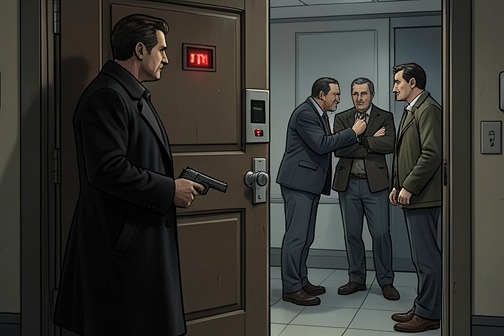
The [Club Jaguar shootout confrontation](entity:event-recall-event-club-jaguar-2608d88ac289) brings [Adam Baye](entity:character-recall-character-adam-baye-7f22fa60bcd3) and [Mike Baye](entity:character-recall-character-mike-baye-1470215d703d) together at the instant [Carson Bledsoe](entity:character-recall-character-carson-bledsoe-8399fe7f60e5) prepares to kill them. The scene’s decisive reversal is that a reunion becomes a point-blank threat, then an attempted shooting is stopped by people entering through a locked, alarm-controlled door. Carson never fires: the gun is taken from him, he is knocked down, and [Mike](entity:character-recall-character-mike-cb6fa8ab1468) declares that there will be no deal.
## Causes and Setup
Carson waits with a gun after receiving an assurance that his employers will prevent the matter from being traced back to him and will keep it from reaching a more serious level. He hangs up, the message having been delivered, and stays armed. That sequence places the confrontation inside a larger arrangement whose protectors remain unnamed here: Carson has been reassured, but the reassurance does not remove the immediate danger he faces or creates for others.
The club’s front door is locked from both sides, and entry or exit requires knowledge of the alarm code. When someone pounds on the door, Carson looks out and sees [Adam](entity:character-recall-character-adam-7e6d3c5ddcc8) with [DJ Huff](entity:character-recall-character-dj-huff-387c2d8e173f). Adam urges whoever is inside to open up, repeating his appeal against the barrier. The security system, meant to regulate movement through the building, becomes a source of suspense: those outside cannot simply reach the people inside, while Carson is already waiting with a weapon.
## Reunion Becomes a Threat
Mike arrives as Adam reaches the corridor. Father and son meet and embrace. The reunion is physical and immediate: Mike feels his son and nearly collapses with relief that Adam is safe. From Carson’s perspective, the embrace is something to mock; he grips the gun and raises it rather than calling out or warning them. He considers negotiation pointless and decides that he has to kill them.
[Rosemary McDevitt](entity:character-recall-character-rosemary-mcdevitt-4b43f4aa6810) shouts for Carson to stop, but her intervention does not change his aim. He sights on Adam and prepares to fire. The scene sharply contrasts the embrace with the raised gun: Mike is still experiencing the relief of finding his son when he catches sight of the weapon at the edge of his vision. There is no pause in which to plan a response. Mike reacts instinctively to Carson aiming at Adam, and the reunion becomes a struggle over whether Adam will survive it.
## The Door Opens
As the danger escalates, [Mo](entity:character-recall-character-mo-ce137376e62f) presses the alarm code 8115 into the entry pad. The indicator changes from red to green, signaling that the door is unlocked. Anthony pulls it open, and the two men rush inside. This is a precise practical reversal: the code that had kept the entrance secured now allows help to cross the threshold while Carson has Adam in his sights.
Carson starts to pull the trigger, but the gun is suddenly taken from behind him. The bouncer from down the street has seized it and is holding it. The speed of the disarming leaves Carson little opportunity to respond. A second man then hits him low and hard in the back. The impact sends Carson forward into Mike’s shoulder as Mike comes from the other direction; Carson is knocked down, winded and in pain, with his ribs feeling as though they have caved in.
## Consequences and Significance
Standing over Carson, Mike tells him that it is over, then turns to Rosemary and refuses any deal. His response closes off the possibility of settling the confrontation through the kind of arrangement Carson had expected or sought. The immediate outcome is not a gunshot but a physical interception: the weapon is removed, Carson is overwhelmed, and the people at risk gain control of the scene.
The confrontation turns on a sudden shift from helplessness to intervention. At first the locked door separates Adam and DJ from Carson, while Mike’s arrival seems only to bring Adam within reach of the gun. Then the alarm code opens a way in, and the bouncer and the other man act before Carson can fire. Mike’s embrace, begun as an expression of relief, is interrupted by danger and ends with him standing over the attacker. The scene thus makes the father-son reunion inseparable from the violence threatening it, while its ending rests on rescue, restraint, and Mike’s refusal to bargain.
Event 19
Adam reveals the truth about Spencer and clears his name
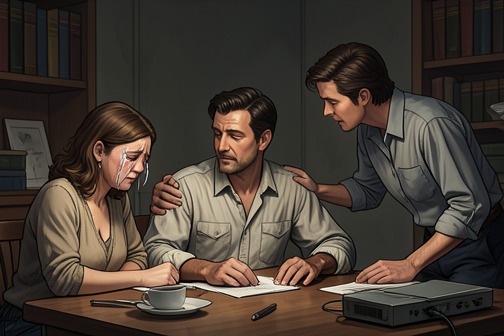
[Adam](entity:character-recall-character-adam-7e6d3c5ddcc8)’s account of his final conflict with [Spencer Hill](entity:character-recall-character-spencer-hill-acd78d41b37e) emerges in a room where grief, suspicion, and the fear of saying too much have converged. Evidence found by [Ron Hill](entity:character-recall-character-ron-hill-b22d4727ae7f) changes the meaning of the stolen prescription pads, and [Betsy Hill](entity:character-recall-character-betsy-hill-5ba525cdb1fc) gives Adam a way to speak about the fight and the calls he did not answer. His admission does not undo Spencer’s death, but it separates Adam’s remorse from responsibility for his friend’s suicide and clears him of the theft that had implicated him.
## The Evidence Changes the Story
The exchange unfolds with Adam crying and [Hester Crimstein](entity:character-recall-character-hester-crimstein-8352225ea1f1) keeping a hand on his forearm, prepared to stop him from speaking. Betsy sits across the table, also in tears; Ron stands behind her, arms crossed, his gaze turned upward and his lips trembling. [Darryl LeCrue](entity:character-recall-character-darryl-lecrue-8241b935ba7f) asks Betsy to tell the others what she has told him. The arrangement places Adam opposite the parents of the friend whose death he has been unable to discuss, while [Mike Baye](entity:character-recall-character-mike-baye-1470215d703d) watches and asks what is happening.
When Adam begins to address Betsy, Hester tries to quiet him. He pulls his arm away. Betsy recognizes that he is afraid he will not be believed and afraid that speaking will hurt Spencer’s memory. She tells him that Spencer is dead and that the death is not Adam’s fault. Her response does not yet explain what happened; it gives him permission to hear the evidence without treating every painful fact as proof of guilt.
Betsy says that the family has proof. Ron explains that he searched Spencer’s room on the night he died and found eight thousand dollars in cash under the bed, along with a prescription pad. He had kept this discovery from Betsy, reasoning that Spencer was already dead and that telling her would only add to her pain. He recognizes that Adam may have held back for a similar reason. The cash and pad give the conversation a concrete basis: the stolen prescriptions were not taken by Adam, as suspicion had suggested, but by Spencer.
## The Fight and the Unanswered Calls
Betsy uses the discovery to reconstruct the final rupture between the boys. She says that Adam learned Spencer had stolen the prescription pads from his father’s house, confronted him, and fought with him. In her account, Adam struck Spencer during the fight. When Spencer later called to apologize, Adam did not want to hear from him and let the calls go to voicemail. The sequence makes clear why the night has remained unbearable to Adam: anger and a deliberate refusal to respond came before Spencer’s death.
Adam confirms the central details himself. He says he should have answered, acknowledges hitting Spencer and calling him names, and recalls telling him he never wanted to speak to him again. He then says that he left Spencer alone when Spencer called for help. The confession gives Adam’s guilt its exact object—not the theft of the prescription pad, but the fight, the final words, and the unanswered calls. It also distinguishes what Adam did from what the evidence establishes: the room’s account identifies his actions and regret, while Betsy explicitly rejects the claim that Spencer’s death was his fault.
The admission is difficult precisely because it does not offer Adam an innocent version of himself. He acknowledges cruelty and a missed chance to respond, but the truth does not turn those choices into a proven cause of Spencer’s death. By allowing the painful facts to be spoken, the scene replaces an unexamined suspicion with a more precise and more complicated understanding of the friendship’s last night.
## From Exposure to Support
After Adam speaks, the room erupts into tears, embraces, and apologies. The revelation does not repair the loss, and the account describes old wounds as being opened and closed rather than erased. Hester takes charge of the immediate aftermath, bringing Darryl LeCrue and Duncan into the response. Those present have seen what happened in the room, and no one wants to prosecute the Bayes. Adam agrees to cooperate in helping send [Rosemary McDevitt](entity:character-recall-character-rosemary-mcdevitt-4b43f4aa6810) and [Carson Bledsoe](entity:character-recall-character-carson-bledsoe-8399fe7f60e5) to prison; that further step is left for another day.
The change in the room is both practical and personal. Ron’s discovery clears Adam of stealing his father’s prescription pads, while Adam’s admission gives Betsy and Ron an account of the fight and the calls they had not had before. At the same time, the group’s response refuses to reduce the encounter to a confession followed by punishment. Their embraces and apologies mark a turn from accusation toward support, even as the facts remain painful and the family’s grief remains unresolved.
## Significance of the Revelation
The scene resolves a mystery through a family’s belated disclosure: Ron had found evidence, withheld it to spare Betsy, and only later brought it forward. His silence had been intended as protection, but it left the stolen pads and Adam’s guilt without explanation. Betsy’s role is equally decisive. Rather than asking Adam to deny the fight, she names what she believes happened and gives him room to confirm it. The truth arrives not as a clean exoneration from every hurtful act, but as a distinction between wrongdoing, remorse, and responsibility for a death.
For Adam and Spencer’s friendship, the revelation preserves both attachment and conflict. Adam had cared enough to be shaken by Spencer’s theft, but his anger ended in words and silence he cannot take back. The scene lets him acknowledge those choices in front of Spencer’s parents without making them the cause of Spencer’s suicide. Its resolution is therefore limited but consequential: Adam’s name is cleared of the theft, the Bayes are not to be prosecuted, and Adam can help pursue Rosemary McDevitt and Carson Bledsoe, while Spencer’s death remains a loss that neither evidence nor apology can reverse.
Event 20
Adam's disappearance after leaving home
[Adam Baye](entity:character-recall-character-adam-baye-7f22fa60bcd3)’s disappearance is finally connected to a lie meant to protect him: [Jill](entity:character-recall-character-jill-c58a30f04db5) invented an invitation to a party at [DJ Huff](entity:character-recall-character-dj-huff-387c2d8e173f)’s house because she feared what [Adam](entity:character-recall-character-adam-7e6d3c5ddcc8) intended to do. The party did not exist, and the deception meant to keep him safe instead became part of the chain that led him to run away.
## The False Invitation
[Tia](entity:character-recall-character-tia-31eb59c37882) returns to the first unanswered question: the email telling Adam to go to a party at DJ Huff’s house. There had been no party, and Adam had never even read the message. Its appearance had seemed to point toward Adam’s plans, but those details make the invitation itself the mystery: someone had sent it without Adam’s knowledge.
The email’s false premise matters because it was designed to reach Adam’s parents, not to bring him to a gathering. Jill had expected the mention of drinking and drugs to make them keep him at home. She knew Adam was going to do something she considered dangerous, but could not tell Tia the truth about [Club Jaguar](entity:location-recall-location-club-jaguar-0f17571f62ac) without risking trouble for him.
## How the Plan Backfired
Jill’s protective scheme depended on her parents reacting as she expected. Instead, Adam ran away. She admits she had not anticipated that response and believes her attempt to intervene made her responsible for his disappearance. Tia rejects that conclusion, separating Jill’s intention to protect him from the unforeseen result.
The revelation also explains why the false invitation had seemed so difficult to place among the other events. Tia had been trying to understand the concurrence of Nash’s rampage and Adam’s disappearance; the email and the gun in [Guy Novak](entity:character-recall-character-guy-novak-20bfab365244)’s drawer sharpen her sense that the separate dangers may be connected. The discovery does not make the events harmless, but it changes the email from a clue about a real party into evidence of Jill’s failed attempt to prevent danger.
## The Girls’ Secrecy and Its Consequences
Jill explains that she and [Yasmin](entity:character-recall-character-yasmin-87ee93b28e1d) spy because they feel adults treat them like babies: the adults conceal things, and the girls try to uncover them. Their secrecy is presented as a response to exclusion, but it also places them in the middle of adult conflicts they do not fully control. Jill knew enough about Adam’s intended actions to fear for him, yet not enough—or not with enough freedom—to warn Tia openly.
The situation around Yasmin had worsened after [Joe Lewiston](entity:character-recall-character-joe-lewiston-ebb7b963d2c2) said something cruel to her. Other children became mean, and Yasmin’s sadness turned to anger. Jill connects that change to Yasmin’s mother, whom she sees as having been useless before this crisis and as viewing the moment as a chance to help Yasmin. In this account, Adam’s disappearance sits within a wider pattern of young people reacting to humiliations and secrets that adults have failed to manage.
Event 21
Shooting confrontation at Tia's home
The shooting confrontation at [Tia Baye](entity:character-recall-character-tia-baye-5661a1b93f78)’s home is the point at which an effort to protect the family becomes a life-or-death test. [Carson Bledsoe](entity:character-recall-character-carson-bledsoe-8399fe7f60e5) pulls a gun on them; [Jill Baye](entity:character-recall-character-jill-baye-4e0454d5ed15) shoots and kills someone. The family’s survival is later linked to Jill Baye and [Yasmin Novak](entity:character-recall-character-yasmin-novak-39ca2c7257f2) having snooped and learned about [Guy Novak](entity:character-recall-character-guy-novak-20bfab365244)’s loaded gun, making prior knowledge—not prediction—the difference between catastrophe and survival.
## Background and Escalating Concern
The confrontation follows a family crisis shaped by anxiety over [Adam Baye](entity:character-recall-character-adam-baye-7f22fa60bcd3)’s safety. [Mike Baye](entity:character-recall-character-mike-baye-1470215d703d) and Tia Baye install software that records [Adam](entity:character-recall-character-adam-7e6d3c5ddcc8)’s keystrokes and can report on his websites, messages, and documents. Its promise of comprehensive information also raises questions about who can access the reports: Tia Baye later wonders whether Brett might have set a password allowing him to read them.
When Adam Baye disappears, Mike Baye turns to a different form of digital surveillance. He pays for a month of GPS service, zooms from a map of the United States down to a street in [New Jersey](entity:location-recall-location-39f2e21cff7b), and locates Adam Baye at the Huff household. These episodes establish the family’s growing reliance on monitoring and location data, but they do not make danger predictable. The later account distinguishes between searching for a loved one and knowing what will happen once danger arrives.
## The Armed Confrontation
Carson Bledsoe’s decision to pull a gun on the family makes the threat immediate. The account does not elaborate on the physical sequence of the encounter; it establishes its decisive outcome instead: Jill Baye shoots and kills another person. The family survives, but its safety comes at the cost of Jill Baye having to take a life.
The family’s preparation is presented as contingent rather than planned. Jill Baye and Yasmin Novak had snooped and knew about Guy Novak’s gun. The retrospective account connects that knowledge to everyone’s survival, while also stressing the irony that the loaded gun Guy Novak kept in his home, an apparent danger in itself, becomes part of what saves the family.
## Aftermath and Significance
Jill Baye recovers from the shooting with surprising ease. Doctors warn that her reaction might be delayed; alternatively, she may understand that her actions were necessary and even heroic. The uncertainty leaves the emotional aftermath open rather than treating survival as a simple return to normal. Jill Baye is no longer a child, but the experience has forced her into an adult responsibility with lasting potential consequences.
The confrontation sharpens the novel’s distinction between surveillance and control. Monitoring Adam Baye may help his parents recognize that he is in over his head, and snooping by Jill Baye and Yasmin Novak supplies knowledge that helps save the family. Yet the same account insists that watching cannot predict events or guarantee safety. Protection can depend on information, but its success remains vulnerable to chance—and the trust damaged by parental snooping does not automatically mend just because the family survives.
Event 22
Circulation of the Lewiston affair video

The circulation of the [Lewiston](entity:character-recall-character-lewiston-f028f25e1611) affair video is not a single, straightforward leak but a sequence of threats, disclosures, and retaliatory decisions. Its decisive revelation is that [Marianne Gillespie](entity:character-recall-character-marianne-gillespie-2c6300bbf530), whom others initially associate with the tape’s release, never sent it: she threatened to do so, then chose to let the matter rest. [Guy Novak](entity:character-recall-character-guy-novak-20bfab365244) nevertheless sent the video to [Dolly Lewiston](entity:character-recall-character-dolly-lewiston-170e01e0221e), while [Jill Baye](entity:character-recall-character-jill-baye-4e0454d5ed15)’s account describes a separate intervention by the girls. The different accounts make the video’s path part of the novel’s larger web of suspicion, secrecy, and revenge.
## Background and Stakes
[Joe Lewiston](entity:character-recall-character-joe-lewiston-ebb7b963d2c2)’s humiliation of [Yasmin Novak](entity:character-recall-character-yasmin-novak-39ca2c7257f2) changes the meaning of the recording from private evidence of an affair into a possible instrument of punishment. [Jill](entity:character-recall-character-jill-c58a30f04db5) later explains that [Yasmin](entity:character-recall-character-yasmin-87ee93b28e1d) became intensely angry after Joe’s treatment of her and the bullying that followed at school. The girls felt that adults were deciding what was best for them while their peers treated them cruelly. Their anger does not begin with the video itself; it gathers around the public consequences of Joe’s actions and the sense that ordinary adult interventions have failed to protect Yasmin.
The recording had already become a source of leverage before it was circulated. According to the account ultimately given to investigators, [Marianne](entity:character-recall-character-marianne-bce7426f25b0) told Guy about the tape and wanted to let the matter go, believing that the threat alone had punished Joe enough. That distinction is central: possession of the video, a threat to release it, and actually sending it are separate acts. The scandal grows partly because those acts are attributed to different people and initially blur together.
## The Girls’ Intervention
Jill tells [Tia Baye](entity:character-recall-character-tia-baye-5661a1b93f78) that she and Yasmin had been spying on adults. They found the video on Yasmin’s camera phone, and Yasmin asked Marianne about it. Marianne told her the affair was over and that Joe was already suffering. Jill’s account presents the girls as acting on what they had seen, but also as making their own choice about how to respond to the humiliation of Yasmin and the hostility directed at them.
The girls acted on the same day, but their interventions had different targets. Jill sent an email about a party in order to prompt [Mike Baye](entity:character-recall-character-mike-baye-1470215d703d) to act; Yasmin sent out the video to make Joe pay. The email drew attention toward one immediate family crisis, while the video carried the Lewiston affair into other people’s lives. Jill’s explanation therefore complicates any simple account of the scandal as an adult’s calculated leak: she describes two teenagers coordinating separate acts, each intended to force a response from adults they believed were not listening.
Jill also insists that they did not mean to cause harm. That claim does not erase the consequences of distributing a private recording, but it distinguishes their stated intention from the wider effects of what they did. The girls understand their actions as retaliation and intervention; the resulting circulation exposes how little control they have over where the information travels or what others will do with it.
## Guy’s Role and the Revised Account
The question of who sent the video remains active as [Tia](entity:character-recall-character-tia-31eb59c37882) confronts Guy. She refers to his statement to the police that he sent it out for revenge, then presses him about whether he knew about it. Her questions place his account under suspicion rather than treating it as settled. Nearby, the video sent to Dolly’s address appears alongside an email about the Huff party and a gun in Guy’s drawer as part of the cluster of clues Tia is trying to connect.
The later investigative conclusion narrows one crucial point. At the storage unit, Muse states that Marianne never sent the tape. She had threatened to send it, but, according to Guy, she told him about it and wanted to let the matter slide. Guy did not share her decision: he sent the video to Joe’s wife, Dolly. The revelation corrects the impression that Marianne carried out her threat and identifies Guy as the person responsible for that particular disclosure.
Jill’s account that Yasmin sent out the video and Muse’s account that Guy sent it to Dolly do not describe the same act in identical terms. The evidence supports both statements without fully detailing whether they refer to separate recipients or stages of circulation. What becomes clear is that the video passed through more than one person’s hands and that the threat, the girls’ retaliation, and Guy’s delivery to Dolly must not be collapsed into a single action.
## Consequences and Significance
The scandal joins adult secrecy to adolescent surveillance. Yasmin and Jill learn about the recording by spying, while the adults’ decisions about whether to conceal, threaten, or release it shape the girls’ sense that they must uncover matters for themselves. The video becomes both evidence and a weapon: its existence allows Marianne to threaten Joe, its discovery gives the girls material for retaliation, and Guy’s decision carries it directly to Dolly.
The sequence also exposes the gap between intended punishment and actual control. Marianne believes the threat is enough; the girls describe their release as an effort to make Joe pay; Guy’s delivery to Dolly turns the affair into a disclosure within Joe’s marriage. Each person acts on a different understanding of what the video should accomplish. The resulting scandal is therefore not simply the revelation of an affair, but a conflict over who has the right to expose it, who will bear the consequences, and how quickly a private threat can become public harm.
Event 23
Nash murders two women
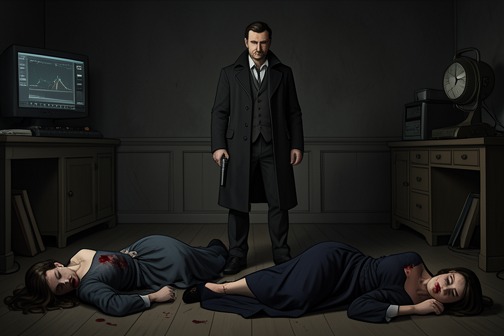
[Nash murders two women](entity:event-recall-event-nash-152a84bbe7c9) to protect his brother-in-law, [Joe Lewiston](entity:character-recall-character-joe-lewiston-ebb7b963d2c2), and eliminate a tape documenting Joe’s infidelity. The crime’s apparent purpose is specific, but investigators also suspect that the tape gave Nash a pretext for violence; the later account links the women’s torture to a search for everyone who knew about the recording.
## Motive and the Tape
In a later discussion, [Loren Muse](entity:character-recall-character-loren-muse-5c463b30f942) and her interlocutor reconstruct the killings as an attempt to help Joe Lewiston locate and destroy the tape. Joe is identified as Nash’s brother-in-law and as a schoolteacher, details that place the crime within a family connection rather than a direct dispute between Nash and the tape’s subject. The recording’s existence thus turns a private infidelity into the motive for a lethal effort to suppress evidence.
## Torture and the Search for Witnesses
The investigators state that Nash tortured the women, ostensibly to learn who else knew about the tape. [Reba Cordova](entity:character-recall-character-reba-cordova-c4e2887a1e57) is raised as an example of someone whose knowledge mattered to that inquiry. The exchange connects the two murders to a wider attempt to identify and silence potential sources of information, while stopping short of establishing from this evidence that Reba was one of the two women Nash killed.
## Reconstruction and Uncertainty
The account reaches the reader through a retrospective conversation rather than a direct depiction of the murders. Muse asks whether Pietra might be lying; both speakers express very little doubt about her account. One investigator notes that Nash had prior convictions and suspects the tape may have served as an excuse for broader violence, but treats that as an interpretation of his conduct, not a charge that can be prosecuted in itself. The distinction leaves the tape as the concrete stated objective while keeping Nash’s larger impulse uncertain.
## Consequences and Significance
The murders expose the lethal cost of trying to erase the evidence of Joe’s infidelity: the effort to destroy one tape expands into torture and a search for others who know about it. Reba’s name extends that inquiry beyond the two women and makes the cover-up’s reach part of the investigation. The crime is therefore reconstructed both as an act committed for a family member and as violence enabled by the attempt to control who could tell the truth.
Event 24
Discovery of Reba Cordova's body
The discovery of [Reba Cordova](entity:character-recall-character-reba-cordova-c4e2887a1e57)’s body ends the uncertainty surrounding her disappearance but brings no relief to her husband, Neil. Pietra’s disclosure leads detectives to a storage unit, where the recovery is confirmed through their measured, devastating response. [Paul Copeland](entity:character-recall-character-paul-copeland-1f129b460ff7) then has to tell Neil what has been found; the scene’s emotional center is not the hidden body itself, but the moment grief becomes impossible to deny.
## From silence to a location
Pietra had stonewalled investigators. After her boyfriend’s death and a deal arranged with her lawyer, she finally broke down and told them where Reba’s body could be found. Copeland had arrived at the disclosure through a simple idea: let Neil speak to her. Two minutes into that conversation, Pietra gave them the location. The change is abrupt but decisive. Information that had been withheld becomes actionable, and the search for Reba moves from uncertainty toward confirmation.
The revelation does not arrive as a full explanation of what happened to Reba. The scene supplies the immediate facts that matter to the recovery: Pietra knows where the body is, she has now said where, and the investigators can act on it. The restraint keeps the disclosure practical and stark. Her words do not undo the violence or restore Reba; they give the people searching for her a place to go.
## The storage unit
At the unit, a supervisor finds the key and puts it in the lock. The door opens, and the detectives enter. The narrative withholds a direct view of what they find. Instead, it makes the discovery legible through the officers’ movement: two of them come out slowly, too slowly for Copeland to mistake what that means. One meets his eyes and nods.
That small gesture completes the recovery without turning it into spectacle. The unit has held what Neil has been seeking, but opening it cannot make the result bearable. Copeland understands before he approaches Neil; the confirmation reaches the reader through the same chain of recognition. A key, an opened door, the detectives’ altered pace, a nod: the ordinary procedure of entering a storage space becomes the threshold between a missing wife and a confirmed death.
## Telling Neil
Copeland walks toward Neil with his eyes raised and tries not to falter. Neil watches him coming and shakes his head, first and then harder, as if denial could still interrupt what he already suspects. He had braced himself for this possibility, but expectation has not cushioned its force. The scene distinguishes anticipating a loss from enduring its confirmation: knowing it may come does not make the blow smaller.
When Copeland reaches him, Neil stops shaking his head and collapses against his chest. He sobs Reba’s name repeatedly, insists that it cannot be true, and begs a higher power to return her. Copeland holds him upright and says nothing. Minutes pass, though the narration refuses to measure them precisely. His silence is not a solution or an explanation; it is the only response the moment allows. The recovered body closes the factual question of where Reba is, while leaving Neil inside the full reality of her absence.
## Evidence, grief, and what follows
The discovery occurs amid another piece of the investigation. [Loren Muse](entity:character-recall-character-loren-muse-5c463b30f942) asks whether [Guy Novak](entity:character-recall-character-guy-novak-20bfab365244) will be prosecuted over the tape. Copeland explains that [Marianne Gillespie](entity:character-recall-character-marianne-gillespie-2c6300bbf530) threatened to send it but never did: she had told Guy about it and thought the threat itself was punishment enough. Guy, however, sent it to [Joe Lewiston](entity:character-recall-character-joe-lewiston-ebb7b963d2c2)’s wife. Copeland says that sending an email is not against the law. This exchange separates the tape’s circulation from Reba’s recovery, even as both belong to the web of concealed information and consequences being untangled around the case.
An hour after supporting Neil, Copeland drives home, showers, puts on his tuxedo, and stands with his groomsmen for his wedding to [Lucy](entity:character-recall-character-lucy-680a57cd8fba). [Cara](entity:character-recall-character-cara-234a2347d241), his seven-year-old daughter, walks down the aisle to an appreciative response, and the governor presides over the ceremony. Muse attends as a bridesmaid and congratulates Copeland with a kiss on the cheek; their wedding conversation goes no further. The abrupt passage from a confirmed death to a public celebration does not reconcile the two events. Later, amid the band and the guests trying to dance, Copeland sits alone, loosens his bow tie, and thinks of Neil and the crushing loss he and his daughters are facing. He finds no grand meaning in the day’s movement from death to marriage. The scene makes room for both events without suggesting that one cancels the other.
Elsewhere, the novel shows grief persisting through the objects and images left behind. [Betsy Hill](entity:character-recall-character-betsy-hill-5ba525cdb1fc) returns to Spencer’s MySpace memorial, where classmates have placed a flickering candle above photographs and a slideshow. She sees little from his close friends and feels the tears come; a photograph appearing briefly in the rotating sequence changes everything, though the scene does not yet explain why. Later she holds Spencer’s long-dead cell phone, stops Ron from packing away his room, and tells him she needs to know what really happened that night, even though the truth will not bring their son back or necessarily make them feel better. These moments do not belong to Reba’s recovery, but they sharpen its significance: discovering what happened can matter even when knowledge cannot restore the dead or end grief.
Event 25
Paul Copeland and Lucy's wedding
[Paul Copeland and Lucy's wedding](entity:event-recall-event-paul-copeland-lucy-e731c07c7b51) is a second marriage framed by an immediate encounter with death. On the cold Saturday morning of the ceremony, Paul goes first to a U-Store-It unit on [Route 15](entity:location-recall-location-route-15-ec0326d1b37f), where Pietra has revealed the location of [Reba Cordova](entity:character-recall-character-reba-cordova-c4e2887a1e57)'s body. The day's movement from the search for the dead to a wedding celebration does not resolve grief; instead, it sets two realities beside each other, and [Cara](entity:character-recall-character-cara-234a2347d241)'s invitation to dance gives Paul a way back into the life he is beginning with [Lucy](entity:character-recall-character-lucy-680a57cd8fba).
## The Search Before the Ceremony
The wedding day begins with Paul standing outside the storage unit alongside [Loren Muse](entity:character-recall-character-loren-muse-5c463b30f942). She reminds him that he does not have to be there, and he answers that the wedding is still six hours away. When she raises Lucy's presence in the decision, he says that Lucy understands. His insistence that he wants to be there makes the trip more than a practical stop before the ceremony: he chooses to witness what follows from Pietra's disclosure, even though he could have spent the morning preparing for his marriage.
The location has emerged after Pietra's boyfriend has died and she has reached a deal through her lawyer. For hours she had maintained her silence. Paul comes up with the idea of letting [Neil Cordova](entity:character-recall-character-neil-cordova-beeae2bbb7a4) speak with her, and within two minutes of that conversation she breaks down and tells them where to find Reba's body. The wedding is therefore preceded by a decisive change in the investigation: Neil's direct appeal succeeds where the earlier questioning did not, and the search acquires a specific destination. Paul is present as that news becomes its consequence, rather than turning away from it for the sake of the celebration.
## Neil's Grief and Paul's Witness
After the encounter at the unit, Paul walks toward Neil, who has been waiting in the car. Neil recognizes what Paul's approach means and shakes his head as if refusing the news could undo it. When Paul reaches him, Neil collapses against his chest, sobbing Reba's name, denying that it can be true, and begging for her return. Paul holds him up and says nothing. The silence is not a solution or consolation; it is the response available to someone who stays beside another person as the reality arrives.
That moment gives the wedding an emotional context it cannot simply leave behind. Paul knows that Neil and the children are facing a crushing loss, and later, amid the festivities, he lets his attention return to them. The ceremony does not mark an uncomplicated passage from sorrow into happiness. Rather, the day makes Paul carry both: he has witnessed the moment Neil can no longer resist the truth, and he must then enter a public celebration of a future of his own.
## The Ceremony and Celebration
An hour after holding Neil, Paul drives home, showers, puts on his tuxedo, and stands with his groomsmen. Cara, his seven-year-old daughter, walks down the aisle to audible admiration, and the governor presides over the wedding. A band and a full reception follow. Loren, a bridesmaid, is dressed elegantly and congratulates Paul with a kiss on the cheek. Their exchange remains brief: he thanks her, and that is the extent of their wedding conversation.
The celebratory setting is vivid, but Paul does not find a grand meaning in its contrast with the morning's death. During a short spell alone, he loosens his bow tie, undoes the top button of his shirt, and listens to the band play an upbeat Justin Timberlake number as guests try to dance. He thinks of Neil and of what Neil and the girls are enduring. The juxtaposition is not presented as a lesson that one joy balances one death. Paul cannot make the day profound merely by placing its two extremes side by side.
## Cara's Invitation and the New Family
Cara interrupts Paul's solitude by taking his hand and asking him to dance. She knows he hates dancing, but tells him she loves the song and asks again. Paul gets up. Cara brings Lucy away from the well-wishers and onto the floor too, gathering father, daughter, and new bride into one small, improvised scene. Their friends and family clap encouragement as Paul dances awkwardly and energetically; Lucy and Cara laugh at him.
The sound of their laughter changes Paul's attention. He dances harder, flapping his arms, twisting his hips, sweating, and spinning until the two faces before him and their laughter fill his awareness. The ending offers no claim that the morning's grief has passed or that the ceremony can repair Neil's loss. Its significance is more intimate: Cara's initiative draws Paul out of isolation, Lucy joins them, and the three appear together as a new family. The day closes not by canceling death with celebration, but by allowing joy to exist beside it.